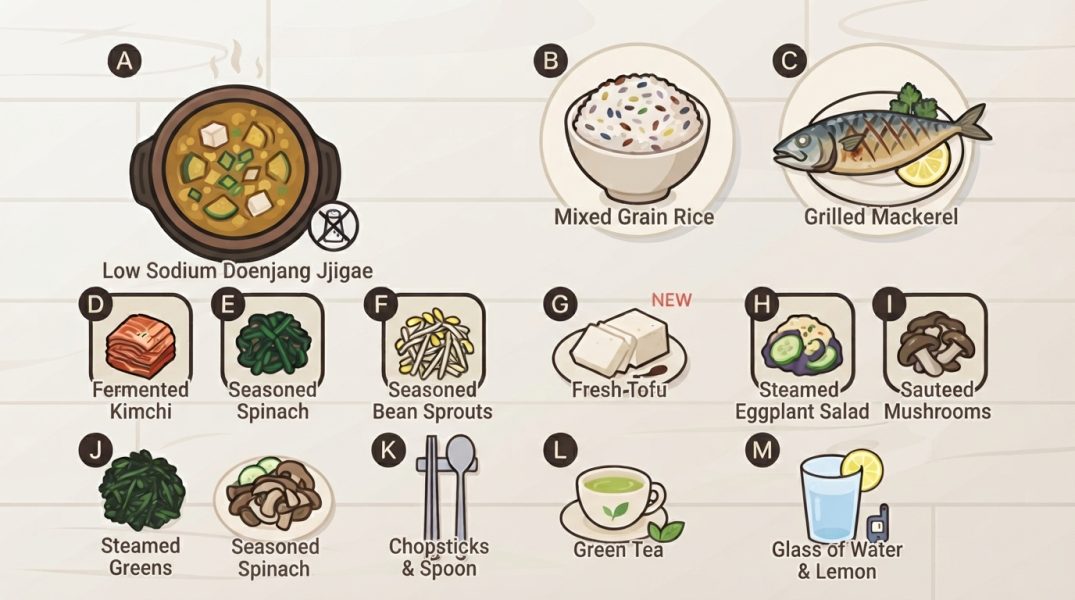

Korea has a long-standing food philosophy called yaksikdongwon — the idea that food and medicine share the same root. It's a nice sentiment. It's also a little ironic, because diabetes rates in Korea have actually been climbing. As of 2020, diabetes prevalence among Korean adults sat at around 10.7%, the highest it's been in over a decade, largely blamed on more Westernized eating habits and a sharp rise in sugar-sweetened drinks.
Here's the thing, though: you don't have to give up Korean food because you have diabetes. Some traditional dishes fit well into a blood-sugar-conscious eating pattern, especially when meals lean on vegetables, whole grains, lean proteins, and moderate carb portions — not because Korean food is some kind of diabetes cure, but because its building blocks line up with what's generally recommended for a balanced meal. The key is knowing which dishes to lean on, which to enjoy in smaller portions, and how to adjust a few familiar recipes.
A quick but important note: this post is not medical advice. If you have diabetes or prediabetes, talk to your doctor or a registered dietitian before making changes to your diet. Everything below is general information, not a personalized treatment plan.
Korean Foods Worth Leaning On
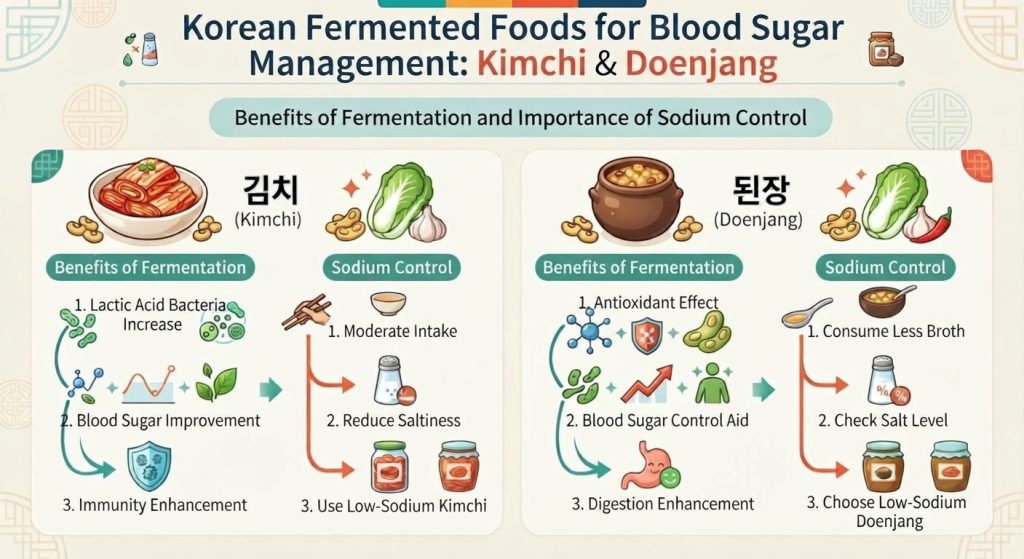
Kimchi. Probably the most studied Korean food when it comes to blood sugar. It's naturally low in calories and carbohydrates (roughly 3.6g of carbs per 100g) and adds vegetables and flavor without relying on added sugar — though it can run high in sodium, so portion matters, especially if you're also watching blood pressure. One small study had 21 people with prediabetes eat either fresh or fully fermented kimchi for eight weeks, then switch. Blood sugar control improved in both groups, a bit more so with fully fermented kimchi. Promising, but not enough evidence to call kimchi a treatment for diabetes.
Doenjang and cheonggukjang (fermented soybean paste). These fermented soybean staples provide flavor and plant-based protein. Some research — mostly animal studies and a few small human trials, including a 2023 review in the Journal of Diabetes Investigation and an earlier study covered by The Korea Times — has looked at potential metabolic benefits, but the evidence is limited, so neither should be considered a treatment for diabetes. Both are also high in sodium, so "may help" doesn't mean "unlimited" — more on that below.
Barley rice and mixed-grain rice (japgokbap). One practical change is to replace some of the white rice in a meal with barley or other whole grains. This can increase fiber and make the meal more nutrient-dense. Portion size still matters, though, since whole grains still contain carbohydrates — this is an upgrade, not a free pass.
Namul (seasoned vegetable side dishes). Spinach, bean sprouts, bellflower root — namul is an easy way to add non-starchy vegetables and fiber to a meal. Preparation varies a lot, though, so look for versions with moderate oil, salt, and sugar.
Boricha (roasted barley tea). Zero sugar, zero calories, and a solid substitute for sweetened drinks — more on that below.
Bulgogi, made thoughtfully. Bulgogi can fit into a diabetes-friendly meal with a leaner cut, a marinade light on added sugar, plenty of vegetables, and a moderate rice portion. Galbi (short ribs) is fattier and better treated as an occasional dish.
How to Adapt Korean Food for a Diabetes-Friendly Eating Pattern
Rather than treating Korean food and American diabetes-friendly eating as two separate worlds, it's more useful to look at how traditional dishes can be adjusted: more non-starchy vegetables, higher-fiber carbohydrates, reasonable portions, and less added sugar and sodium. Most health guidance doesn't point to one single "correct" diet for diabetes — the common threads are non-starchy vegetables, whole grains, legumes, and lean protein, with less added sugar and processed food. A lot of traditional Korean cooking, with a few small adjustments, already leans that way.
Where to Find the Ingredients in the U.S.
You don't need a special trip for most of this. Regular American grocery stores carry pearled barley, brown rice, quinoa, tofu, spinach, bean sprouts, mushrooms, zucchini, soy sauce (including low-sodium), sesame oil, garlic, and ginger. A Korean or Asian grocery store (or Amazon) is your best bet for gochugaru, doenjang, cheonggukjang, salted shrimp or anchovy sauce, and gochujang. In a pinch, Japanese miso can stand in for doenjang (different flavor, same fermented-soybean idea), and regular crushed red pepper can sub for gochugaru's heat, though you'll lose some color and umami depth.
Recipe: Mixed Grain Rice (Japgokbap)
Ingredients: 1 cup brown rice, 1/2 cup pearled barley, 1/4 cup black beans or lentils, water as needed
- Rinse the brown rice and barley separately, then soak for about 30 minutes.
- Combine with the beans or lentils in a rice cooker or pot.
- Use slightly more water than you would for plain white rice — whole grains absorb more liquid.
- Cook as you normally would.
Tip: If this is new territory for you, start by mixing a small amount of these grains into your regular rice and gradually increase the ratio over time, rather than switching all at once. Keep an eye on your overall portion, since whole grains are more fiber-rich than white rice but still count as carbohydrates.
Recipe: Lower-Sugar Bulgogi
Ingredients: 1 lb thinly sliced sirloin (ask your butcher to slice it thin, or buy pre-sliced "bulgogi meat" at a Korean market), 1/4 Asian pear (grated), 3 tbsp soy sauce, 2 cloves garlic (minced), 1 tbsp sesame oil, a pinch of black pepper, 1 tsp stevia or allulose (as a sugar substitute)
- Grate the pear to release its juice — the natural sweetness and tenderizing enzymes mean you don't need much added sugar.
- Mix the pear juice with soy sauce, garlic, sesame oil, pepper, and your sugar substitute to make the marinade.
- Marinate the beef for at least 30 minutes, ideally 2+ hours.
- Stir-fry over high heat with little to no added oil.
- Add vegetables like onion, mushroom, or zucchini to the pan for extra fiber and volume.
Tip: Using pear juice plus a small amount of stevia or allulose instead of straight sugar reduces the amount of added sugar in the marinade while keeping the sweet-savory character of bulgogi.
Recipe: Vegetable-Loaded Doenjang Jjigae (Soybean Paste Stew)
Ingredients: 2 tbsp doenjang, 1/2 block tofu, 1/2 zucchini, 1/2 onion, 1 cup mushrooms (shiitake or button), 2 cups water, 1 tsp minced garlic
- Dissolve the doenjang into the water and bring to a boil.
- Add the onion, mushrooms, and zucchini, and simmer over medium heat for about 5 minutes.
- Cube the tofu and add it, simmering for 2–3 more minutes.
- Stir in the garlic, let it simmer briefly, then turn off the heat.
Tip: The tofu and vegetables add protein and fiber, while leaving room to control the amount of rice served with the meal.
A sodium note: Doenjang can be high in sodium, and the exact amount varies quite a bit by brand — including the doenjang sold in the U.S. — so it's worth checking the nutrition label and using a moderate amount rather than assuming every brand is the same. A few easy ways to dial it back: use 1 tablespoon instead of 2, bulk up the stew with extra vegetables and water to dilute it, or look for a reduced-sodium doenjang if your grocery store carries one. The American Diabetes Association generally recommends keeping sodium under 2,300mg a day when clinically appropriate, so it's a good habit to factor doenjang into that total rather than treating it separately.
A Few Practical Tips
- Order (or cook) mixed-grain rice instead of plain white rice when you can, and keep portions reasonable either way.
- Keep kimchi in regular rotation as a side dish — just keep an eye on sodium intake alongside it.
- Go easy on the amount of doenjang or cheonggukjang per serving — both are flavorful enough that a little goes a long way, which also helps keep sodium in check.
- When eating out, lean toward grilled dishes and stews.
- Boricha or roasted corn tea (oksusu cha) are great traditional, unsweetened options to drink alongside a meal.
- Always loop in your doctor or dietitian before using any of this to actually manage a diagnosed condition.
The short version: you don't have to give up Korean food because you have diabetes. A lot of what makes it so comforting — the fermentation, the vegetable-heavy side dishes, the grains — can fit into a balanced meal for people watching their blood sugar, as long as portions and preparation stay in mind. It's less about overhauling your diet and more about knowing what to lean on.
Frequently Asked Questions About Korean Food and Diabetes
Is Korean Food Good for Diabetes?
It can fit into a diabetes-friendly eating pattern when meals are built around fermented foods like kimchi and doenjang in moderate amounts, vegetable-based banchan, and mixed-grain rice, while limiting sugary dishes like sikhye and tteokbokki. It isn't a treatment for diabetes on its own.
Is Kimchi Good for Blood Sugar?
Kimchi is low in carbohydrates and high in fiber, and small studies suggest fully fermented kimchi may support better blood sugar control than fresh, unfermented cabbage. The evidence is still limited, so it shouldn't be treated as a cure or guaranteed fix.
Can I Make Diabetes-Friendly Korean Food With Regular American Grocery Store Ingredients?
Mostly, yes. Staples like barley, tofu, mushrooms, and vegetables are widely available; a few ingredients like doenjang and gochugaru are easiest to find at a Korean or Asian grocery store.
Is Doenjang Too Salty for a Diabetes-Friendly Diet?
Doenjang can be high in sodium, and the amount varies by brand, so it's worth checking the label and using a moderate amount — especially for anyone also managing blood pressure. It's not a reason to avoid it entirely, but it's best used in moderation rather than treated as unlimited.