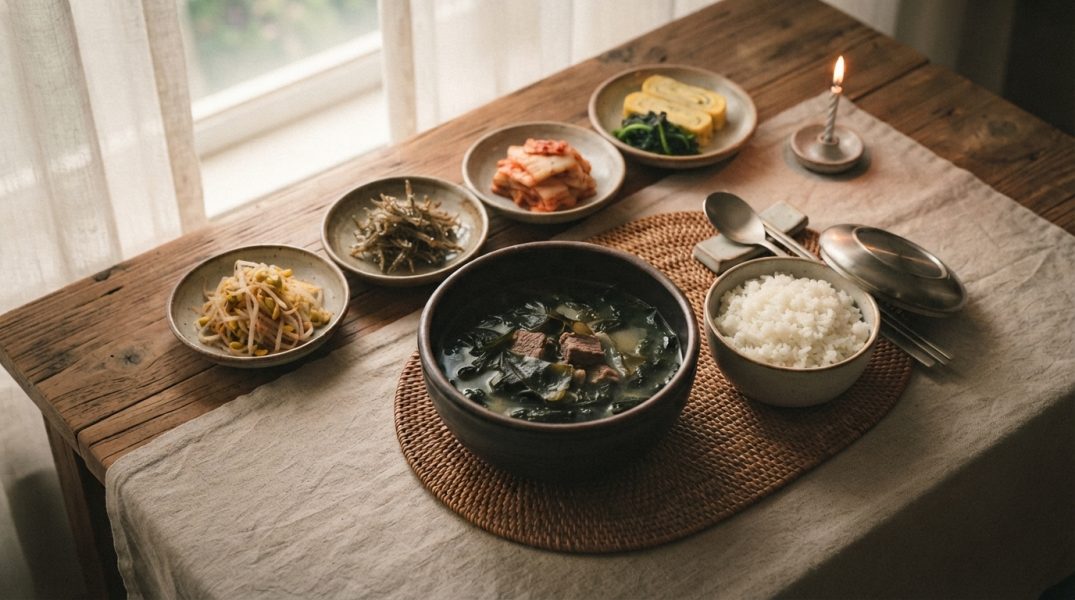

I'm Korean, and for as long as I can remember, there has never been a meal at our table without soup. Doenjang jjigae, kimchi jjigae, miyeok-guk — the side dishes might change day to day, but soup has never been optional. If soup is missing, something feels fundamentally off about the whole meal. To this day, soup is the dish I think hardest about when I'm cooking. Once the soup is sorted, I know the rest of the table — a few banchan here and there — will somehow fall into place.
And yet, if you'd asked me why soup has to be there, I don't think I could've given you a clear answer. It was just always there, so I never questioned it. So today, I'm actually digging into why.
A Quick History of Why Soup Became Essential
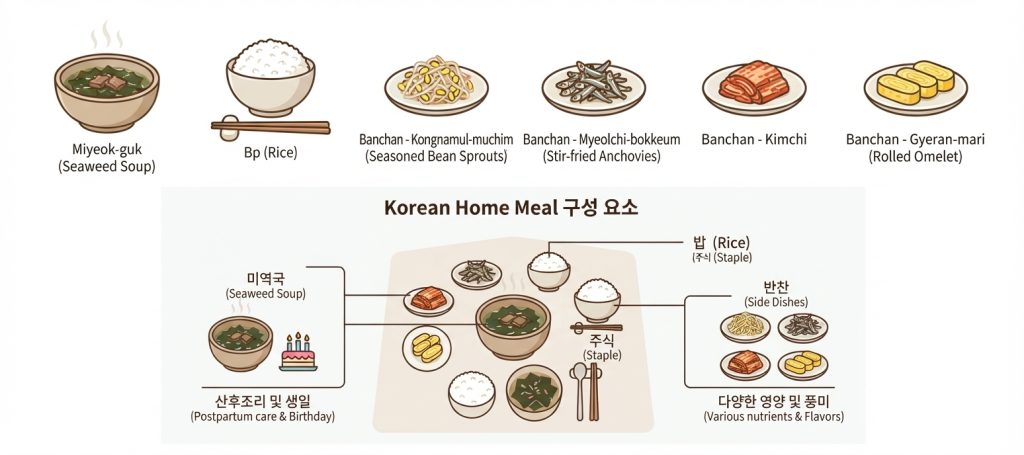
A traditional Korean meal is built around four pillars served together on one table: bap (rice), guk (soup), banchan (side dishes), and jang (seasoning pastes like soy sauce or gochujang). Unlike a Western-style meal, where a soup course might open or close things, Korean soup sits on the table at the same time as everything else, the whole way through.
This structure, known as bapsang, developed gradually over roughly a thousand years and was further codified during the Joseon Dynasty, when royal court cuisine turned the whole table setting into something close to an art form. Food historians who've studied the Korean diet describe guk's role in very practical terms: it helps people chew and swallow rice more easily, which in turn supports digestion. In other words, soup wasn't just a flavor addition — it was functionally built into how a Korean meal works, helping dry rice go down smoothly and making the whole meal easier on the stomach.
It's worth pointing out that bap (rice) itself was historically the calorie workhorse of the meal — the main source of energy — while guk and banchan rounded things out nutritionally and texturally. That division of labor is part of why a Korean table almost never skips the soup course even when everything else on it is simple. A bowl of rice and a scattering of banchan without guk can feel, to a Korean eater, like a meal that's technically complete but somehow unfinished.
Guk vs. Jjigae: What's the Difference?
This is the part that trips up English speakers the most, because both guk and jjigae get translated as "soup," but they're not really the same thing.
- Guk: More broth, lighter seasoning. Eaten with a spoon, often poured over or mixed into rice.
- Jjigae: Less broth, bolder seasoning. Treated more like a shared side dish than a drinkable soup.
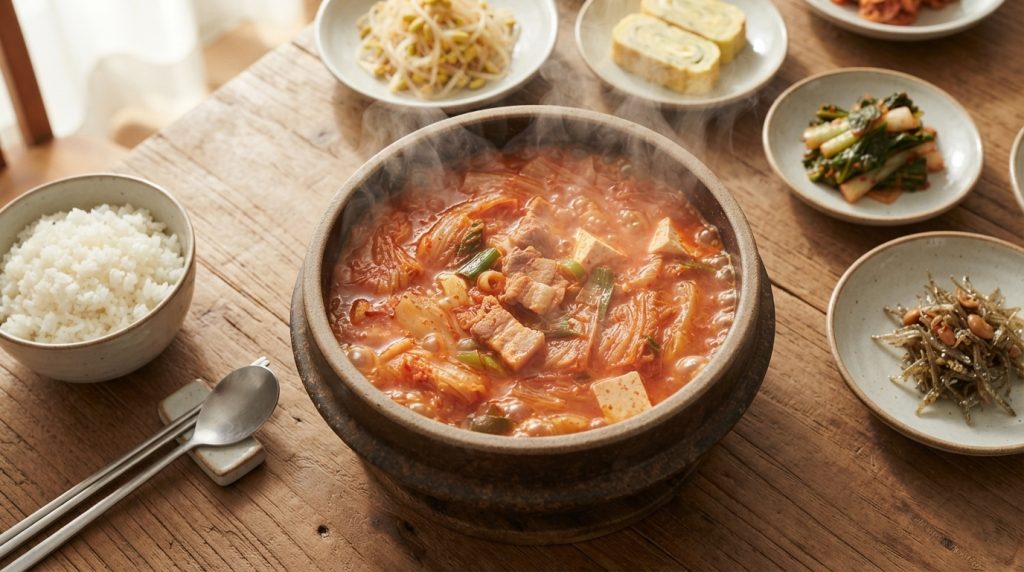
Neither one is really optional at a Korean table — they just play slightly different roles depending on the meal. A simple way to think about it: guk is closer to "the soup course," something you could technically sip on its own, while jjigae behaves more like a communal, spoon-shared side dish that happens to be liquid. If you're ever unsure which one you're looking at on a menu, a good rule of thumb is that jjigae usually comes bubbling in its own small pot, while guk arrives in a regular bowl.
A Few Classics Worth Knowing
- Kimchi jjigae: Made with sour, well-fermented kimchi and pork (or sometimes tuna) — one of the most frequently cooked dishes in Korean homes.
- Doenjang jjigae: A savory, earthy stew built on fermented soybean paste, usually with tofu and vegetables.
- Miyeok-guk (seaweed soup): Best known as Korea's traditional birthday soup. The tradition actually comes from postpartum care — new mothers have long eaten miyeok-guk after childbirth because it's rich in calcium and iodine, and the custom is tied to honoring Samsin Halmoni, a goddess associated with childbirth in Korean folk belief. Eating it on your birthday is essentially a quiet way of honoring your mother and the day she gave birth to you.
- Seolleongtang: A milky-white broth made by simmering ox bones for upwards of ten hours, usually served with diced radish kimchi on the side.
- Samgyetang: A whole young chicken simmered with ginseng, jujube, and glutinous rice — traditionally eaten on the hottest days of summer. I've actually gone into the "why hot soup in summer" logic behind this one in an earlier post about samgyetang, so I won't repeat myself here, but it's worth a read if you're curious.
Soup as Comfort Food
For Koreans, soup isn't just food — it's emotional. Sick, cold, or just had a rough day? A hot bowl of soup is almost a universal Korean instinct at that point. I think that's part of why I still obsess over getting the soup right before anything else on the table: on some level, I know the soup sets the emotional tone for the entire meal. A good soup makes the whole thing feel like home, even when the rest of the meal is thrown together.
There's also a seasonal rhythm to it that a lot of people don't expect. Summer leans toward lighter, cooling soups, or paradoxically, the scorching-hot samgyetang mentioned above. Winter brings out heavier, richer stews meant to warm you from the inside out — think of a steaming pot of kimchi jjigae on a freezing January night. Soup isn't a static category in Korean cooking; it shifts with the weather, the season, and honestly, the mood of whoever's cooking that day. My own soup rotation changes constantly depending on what's in the fridge, what the weather's doing, and what kind of day I've had — which is maybe the most Korean thing about it.
How This Compares to American Food Culture
America has soup too, obviously, but it usually plays a different role — either as a starter before the main course, or as a complete meal on its own, like clam chowder or chicken noodle soup. The idea of soup showing up automatically, at the same time as everything else, at nearly every single meal, isn't really a thing in American food culture. That structural difference is honestly one of the more interesting things for American readers to wrap their heads around — it's not that Americans don't like soup, it's that Korean meals are built around it in a way American meals generally aren't.
There's also a portion and purpose difference worth noting. American soup tends to be hearty enough to stand on its own — a big bowl of chili or a thick clam chowder is basically dinner by itself. Korean guk and jjigae are usually sized and seasoned to be eaten alongside rice and banchan, not instead of them. Order a bowl of doenjang jjigae without rice at a Korean restaurant and you'll probably get an odd look — it's built to be part of a bigger plate, not a meal unto itself.
How to Enjoy Korean Soup Culture in the U.S.
- At a Korean restaurant, don't just order banchan and a main — order a guk or jjigae too. It genuinely changes the meal.
- If you're cooking at home for the first time, doenjang jjigae or miyeok-guk are both approachable starting points, and both freeze well if you want to make a big batch.
- Try samgyetang in the middle of summer at least once — it's a strange-sounding experience until you actually do it.
- Remember that guk and jjigae are meant to be eaten with rice, not as a standalone dish — that pairing is really where the whole thing clicks.
- If a Korean soup or stew tastes a little salty on its own, that's intentional — it's designed to be balanced out by the rice, not eaten solo.
At the end of the day, soup isn't just something Koreans happen to like. It's baked into the actual structure of the meal, going back centuries, with a very practical job to do alongside a very emotional one. So the next time you see a steaming bowl of jjigae land on a Korean table in the middle of August, just know — there's a thousand years of logic behind it.
Frequently Asked Questions About Korean Soup Culture
Why Is Soup Such a Big Part of Korean Meals?
Korean meals traditionally follow a structure called bapsang, where rice, soup, and side dishes are all served together. Soup historically helped make rice easier to chew and swallow, making it a functional as well as a flavorful part of the meal.
What's the Difference Between Guk and Jjigae?
Guk has more broth and lighter seasoning, often eaten with a spoon or mixed into rice. Jjigae has less broth and bolder seasoning, and is treated more like a shared side dish.
Why Do Koreans Eat Seaweed Soup on Birthdays?
Miyeok-guk's birthday tradition comes from its role in postpartum care — new mothers have long eaten it after childbirth for its nutrients, and eating it on your birthday honors your mother and your own birth.
Is It Normal to Eat Hot Soup in the Summer in Korea?
Yes — dishes like samgyetang are traditionally eaten during the hottest days of the year as part of a long-standing Korean food custom.