
I still remember the exact feeling of a Korean summer afternoon as a kid: the kind of humid, bone-melting heat where even standing still felt like effort, and the asphalt seemed to shimmer. And I remember exactly how the adults around me responded to it — not by reaching for something cold, necessarily, but sometimes by ordering a bowl of steaming hot chicken soup and sweating through it on purpose. As a kid, this made zero sense to me. Why would you eat something hot when you're already melting? It took me years, and a few scorching Boknal afternoons of my own, to understand that Koreans have an entire philosophy built around this idea.
It's called Iyeol Chiyeol — literally, "fighting heat with heat." The logic is that in the peak of summer, your body needs a boost from the inside, not just relief on the outside, and a hot, nourishing meal can do that better than an ice-cold drink ever could. Of course, Koreans also love their cold food in summer, so it's not an either-or philosophy — it's more like a two-pronged strategy. Today I want to walk you through three of the most beloved dishes in that strategy: Naengmyeon, Samgyetang, and Patbingsu. One is icy, one is scalding hot, and one is dessert — together, they pretty much sum up how Korea survives its summers.
1. Naengmyeon: The Coldest Korean Summer Food
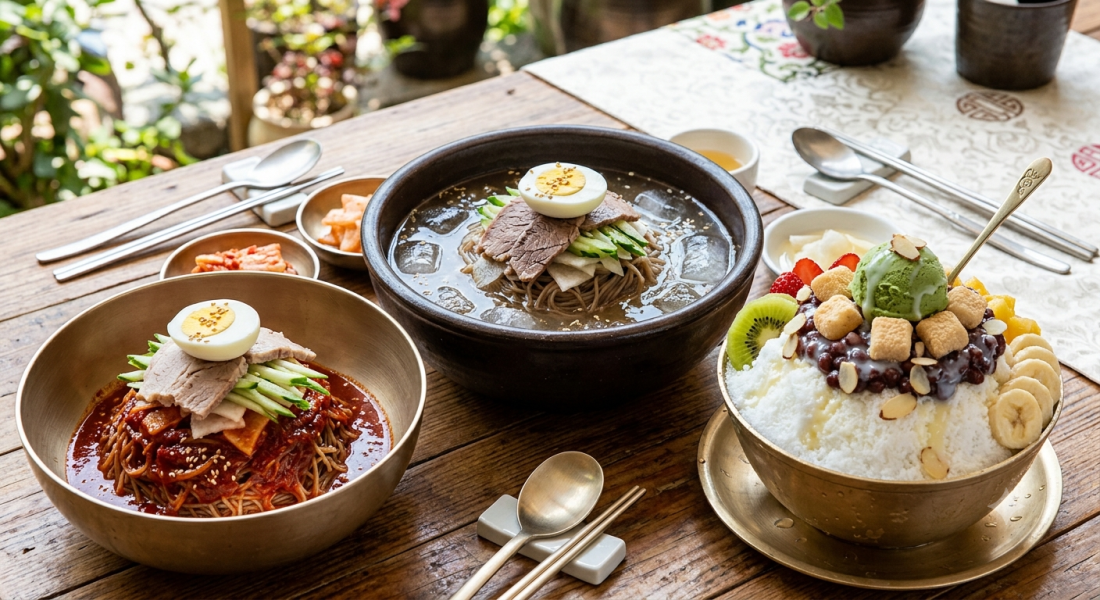
Naengmyeon is probably the dish most people picture when they think "Korean summer food." It's built around thin, chewy noodles — traditionally buckwheat, sometimes a starch blend — served either swimming in an icy, tangy broth (mul naengmyeon) or tossed in a fiery red pepper sauce (bibim naengmyeon).
Here's the twist that surprises most people: naengmyeon wasn't originally a summer dish at all. It actually started as a winter food, born out of Korea's northern regions — Pyongyang and Hamhung are both closely associated with it — back when the only way to get truly cold broth was to use ice stored from the previous winter. As refrigeration became widespread in the 20th century, naengmyeon made the jump from a cold-weather specialty to the ultimate hot-weather relief food, and it never looked back.
Buckwheat, the traditional base, brings a decent amount of fiber and antioxidants to the table, and the ice-cold broth does exactly what you'd want it to on a 95-degree day — it cools you down and somehow makes you want to eat more, not less. It's light, tangy, a little chewy, and genuinely refreshing in a way that's hard to describe until you've had a bowl of it in real Korean summer heat.
2. Samgyetang: A Hot Korean Summer Dish That Works
If naengmyeon is the obvious choice, samgyetang is the one that trips people up. Eating a bowl of steaming-hot chicken soup on the single hottest day of the year sounds, on paper, like a terrible idea. But it's one of Korea's most cherished summer traditions, especially during Boknal — the three hottest stretches of the Korean summer calendar — when restaurants known for samgyetang are often lined up out the door.
The dish itself is a labor of love: a whole young chicken stuffed with glutinous rice, ginseng, garlic, and jujubes, then simmered low and slow for hours until the meat falls off the bone and the broth turns rich and milky. It's been a staple of Korean seasonal eating for centuries, rooted in the traditional belief that the body needs replenishing, not cooling, during the most physically draining part of the year.
Nutritionally, it earns its reputation — the chicken delivers high-quality protein, garlic and jujubes bring antioxidants to the mix, and ginseng has long been valued in Korean traditional medicine as a vitality booster (worth noting: that's a traditional belief rather than a clinically proven effect, but it's part of why the dish carries the weight it does culturally). Whatever the science says, there's something genuinely comforting about a bowl of samgyetang — it's the kind of soup that makes you sweat and feel restored at the same time.
3. Patbingsu: Korea's Favorite Summer Dessert
And then there's dessert. Patbingsu might be the most purely joyful entry on this list — a towering bowl of finely shaved ice piled with sweetened red beans, chewy rice cakes, fresh fruit, a drizzle of condensed milk, and often a scoop of ice cream on top for good measure.
The dish has come a long way from its origins as a simple bowl of shaved ice and red beans. Over the decades, Korean cafés have turned patbingsu into a genuine canvas — you'll now find versions built around mango, matcha, cheesecake, even chocolate, each one a slightly different take on the same basic idea of ice, sweetness, and texture.
Red beans bring a bit of fiber and minerals to the party, and when you pile fresh fruit on top, patbingsu edges just slightly closer to "not purely indulgent" territory — though let's be honest, nobody is ordering this for the nutritional value. You order it because on a brutal August afternoon in Seoul, nothing hits quite like a giant bowl of shaved ice shared with friends, spoons clashing in the middle.
How These Compare to American Summer Food
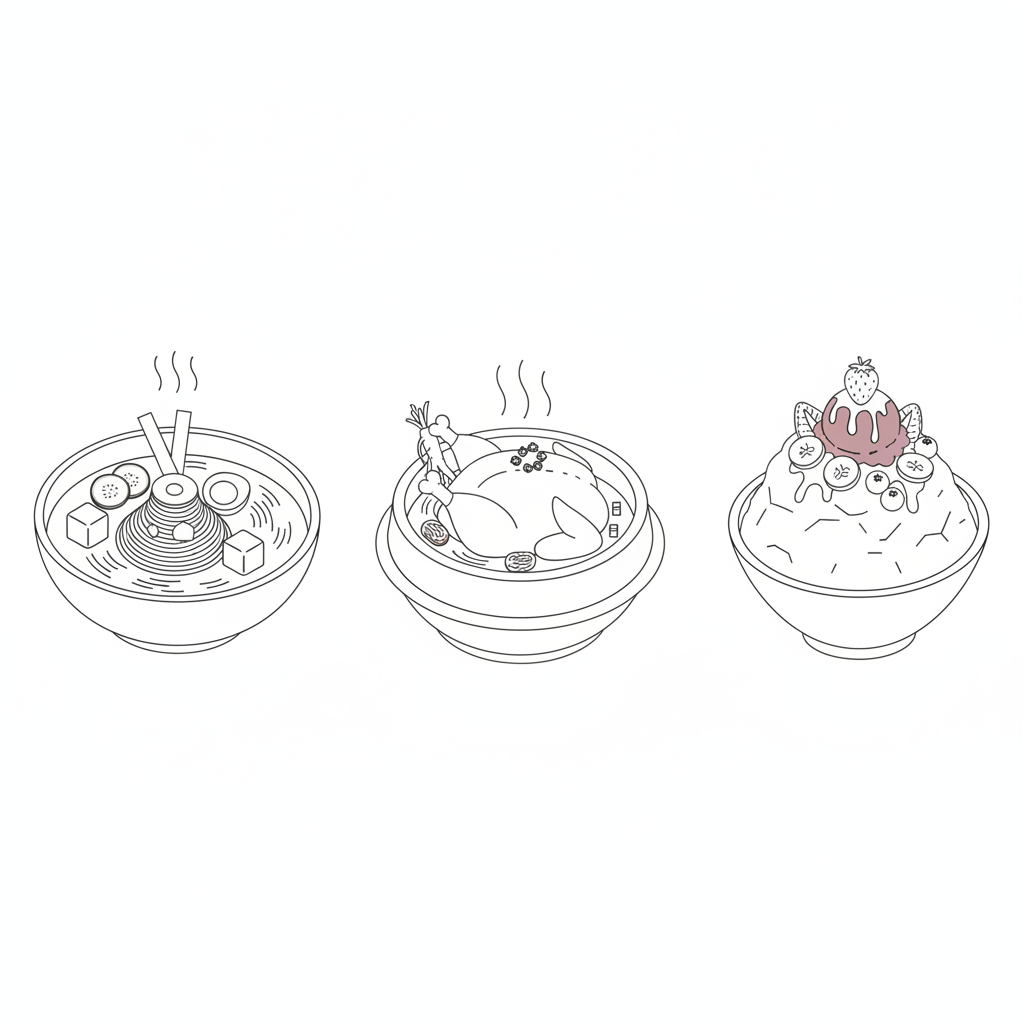
If you're trying to place these dishes against a familiar American summer spread, the comparisons come pretty naturally. Naengmyeon plays a role similar to what a chilled pasta salad or a cold noodle bowl does at an American cookout — something light, tangy, and served cold specifically because it's too hot to want anything heavy. Samgyetang, on the other hand, doesn't have a great American parallel — Americans tend to save chicken soup for when they're sick, not when it's 95 degrees outside — which is exactly why it's worth trying with an open mind. And patbingsu sits somewhere between a sundae and shaved ice from a summer fair stand, but built with far more architecture and far less sugar-syrup-only flavor.
How to Enjoy These Dishes in the U.S.
- Naengmyeon: Korean restaurants, especially ones specializing in noodle dishes, will usually have both the mul (broth) and bibim (spicy, saucy) versions on the menu. If you're new to it, start with mul naengmyeon — it's the gentler introduction.
- Samgyetang: Look for it specifically at Korean restaurants that serve traditional or home-style dishes, since it's less common on general Korean BBQ menus. It's worth ordering even in summer, especially if you want the full Iyeol Chiyeol experience.
- Patbingsu: Korean dessert cafés are the move here — many now specialize almost entirely in patbingsu, with rotating seasonal flavors. It's meant to be shared, so don't order one per person unless you're truly committed.
- Making any of these at home: Naengmyeon and patbingsu are both very doable with a Korean grocery store trip (noodles, red beans, and rice cakes are all shelf-stable or frozen). Samgyetang takes more time, but a slow cooker makes it far more approachable for a home cook.
Final Thoughts on Korean Summer Food
Korean summer food isn't just about cooling down — it's a whole seasonal philosophy, balancing cold relief with hot restoration, tradition with genuine pleasure. Whether you're slurping down an icy bowl of naengmyeon, sweating through a bowl of samgyetang, or digging into a mountain of patbingsu with friends, each dish tells you something about how Korea has learned to live with its brutal summers — and how to enjoy them anyway.
If you're looking for a place to start exploring Korean cuisine this summer, these three dishes are about as good an entry point as you'll find. You might just discover that the flavors of a Korean summer stick with you long after the season ends.
We're excited to introduce many more Korean foods, their fascinating stories, and easy-to-follow recipes in the coming posts. We hope you'll join us on this delicious journey and continue to support K-Food Cravings.
Happy cooking, and see you in the next post!