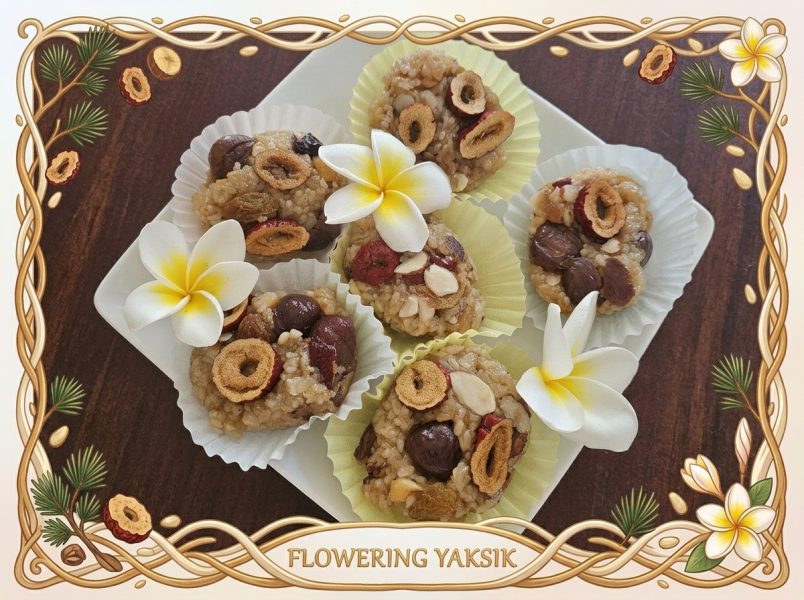

Yaksik(Yakbap): A Sweet Bite of Korean History and Tradition
Among Korea’s traditional desserts, there is one that may look unfamiliar at first but often wins people over after just one bite: Yaksik, also called Yakbap.
Yaksik is a traditional Korean sweet rice dessert made with sticky rice, jujubes, chestnuts, raisins, and nuts. The rice is flavored with dark brown sugar, soy sauce, sesame oil, honey or rice syrup, and a touch of cinnamon.
The result is something truly special: chewy rice, sweet jujubes, soft chestnuts, crunchy nuts, and the warm, nutty aroma of sesame oil. It is sweet, savory, fragrant, and comforting all at the same time.
Yaksik: A Dessert with a Long History
Yaksik has a history that goes back many centuries. One famous traditional story connects it to the Silla period of Korean history and the Korean tradition of celebrating the first full moon of the lunar year, known as Jeongwol Daeboreum.
According to the story, a crow warned a Silla king of danger, and people later prepared a special rice dish to honor the event. This story is often associated with the origins of Yaksik.
There is also a beautiful idea behind the name “Yaksik.” In traditional Korean culture, people often believed that food could also be medicine. Ingredients that were considered nourishing or beneficial were naturally incorporated into everyday cooking.
That is why Yaksik is such an interesting food. It is not simply a sweet treat. It represents the traditional Korean idea of bringing together delicious ingredients, nourishment, and cultural meaning in one dish.
So, What Does Yaksik Taste Like?
If you have never tried Yaksik, imagine something between a sticky rice pudding and a Korean holiday dessert—but with a very different flavor profile.
Unlike Western rice pudding, Yaksik does not use milk or cream. Instead, soy sauce and sesame oil give the dessert a subtle savory depth.
Dark brown sugar creates its beautiful caramel-like color and rich sweetness. Jujubes and cinnamon add a warm, fruity aroma, while chestnuts provide a soft, comforting texture. Raisins and nuts add little bursts of sweetness and crunch.
Every bite is slightly different, which is part of the fun.
Is Yaksik Nutritious?
Yaksik contains several wholesome traditional ingredients. Sticky rice provides carbohydrates, while chestnuts and nuts contribute fiber, protein, healthy fats, vitamins, and minerals.
Jujubes have also been used in Korean cuisine and traditional food culture for generations.
However, Yaksik does contain sugar and syrup, so I would not describe it as a “health food” in the modern sense. Instead, think of it as a traditional dessert made with a variety of nourishing ingredients.
My favorite way to enjoy it is to cut it into small pieces and savor one slowly with a cup of tea or coffee.
Making Yaksik at Home
For this recipe, we are making a generous batch with 7 cups of sticky rice, perfect for a family gathering, holiday celebration, or party.
First, we make a fragrant jujube broth using the jujube seeds and scraps. Then we combine the warm broth with dark brown sugar, soy sauce, honey or rice syrup, cinnamon, and a pinch of salt.
The soaked sticky rice and chestnuts are cooked together in a rice cooker. After cooking, we add the remaining jujubes, raisins, mixed nuts, and sesame oil.
Finally, the warm Yaksik is pressed into a baking dish or individual molds and allowed to cool.
I especially love making small, bite-sized pieces because they are easy to serve and beautiful on a dessert table.
And here is another great thing about Yaksik: it freezes wonderfully.
Wrap individual pieces and keep them in the freezer. Whenever you want a little taste of Korea, simply take one out and let it thaw at room temperature.
When I introduce Yaksik to my American friends, I like to say:
“This isn't just a dessert. It's a little piece of Korean history you can eat.”
Because that is exactly what Yaksik feels like to me.
Inside every chewy piece are centuries of Korean food culture, traditional celebrations, family gatherings, and the Korean belief that good food should be both delicious and meaningful.
So, grab a pair of chopsticks and give it a try.
And don't be surprised if your first reaction is:
“Sweet rice?”
Followed a few minutes later by:
“Can I have one more piece, please?”
Here is a delicious and traditional recipe for making Yaksik (Sweet Sweet Rice Dessert ) using 7 cups of sticky rice (sweet rice).
Ingredients for Traditional Yaksik
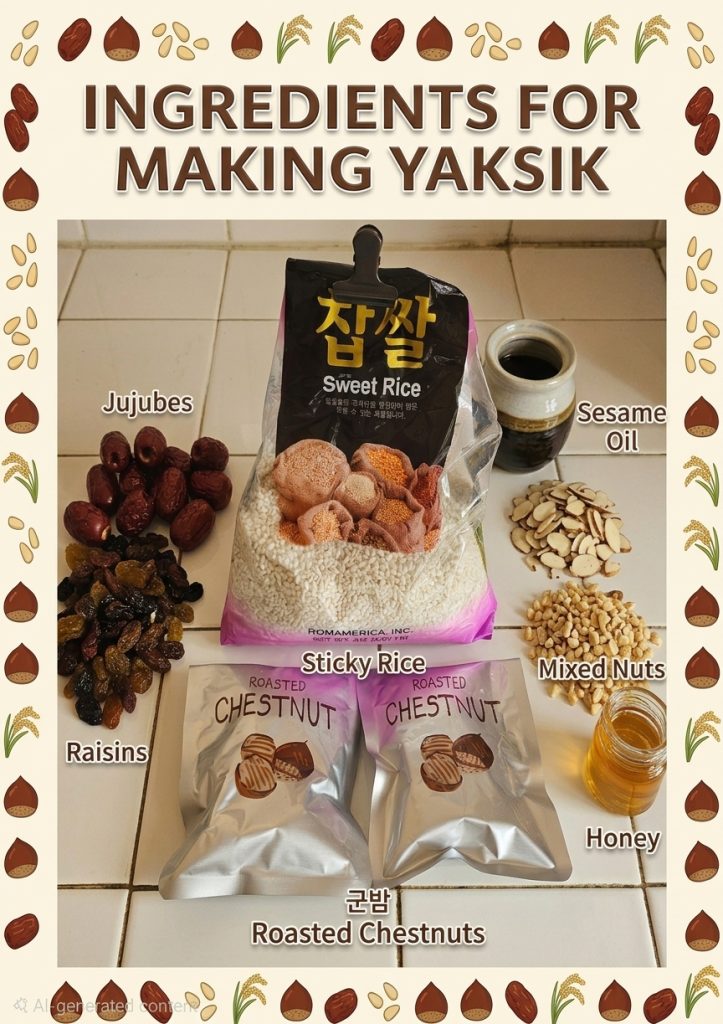
Main Ingredients:
- Sticky Rice (Sweet Rice ): 7 cups (washed and soaked in water for at least 3 to 4 hours, then drained)
- Jujubes (Dried Red Dates ): 20–25 pieces (pitted and sliced; keep the seeds for making jujube water)
- Chestnuts (Chestnuts): 15–20 pieces (peeled and halved or whole)
- Raisins : 1/2 cup to 1 cup
- Mixed Nuts (Pine nuts, sliced almonds, walnuts, etc.): 1 cup
Seasoning & Sauce:
- Jujube Broth / Water: ~3 to 3.5 cups (made by boiling the jujube seeds/scraps)
- Dark Brown Sugar (or Muscovado Sugar): 1.5 to 2 cups (Dark brown sugar gives Yaksik its signature rich color and flavor)
- Soy Sauce : 6–7 tbsp
- Sesame Oil : 4–5 tbsp
- Honey or Rice Syrup : 2–3 tbsp
- Cinnamon Powder : 1 tsp (adjust to taste)
- A pinch of salt
Step-by-Step Instructions for Making Yaksik
1. Prep the Ingredients
- Soak the Rice: Wash 7 cups of sticky rice thoroughly until the water runs clear. Soak in cold water for at least 3–4 hours, then drain well using a colander for 20–30 minutes.
- Make Jujube Water: Remove seeds from the jujubes and cut the flesh into strips or thin rolls. Put the seeds and leftover jujube scraps into a pot with about 4–5 cups of water. Boil on medium heat for 15–20 minutes to extract a rich jujube broth. Measure out about 3.5 cups of this liquid.
- Mix the Sauce: While the jujube broth is still warm, add the dark brown sugar, soy sauce, honey, cinnamon powder, and salt. Stir well until the sugar dissolves completely.
2. Cooking (Using a Rice Cooker)
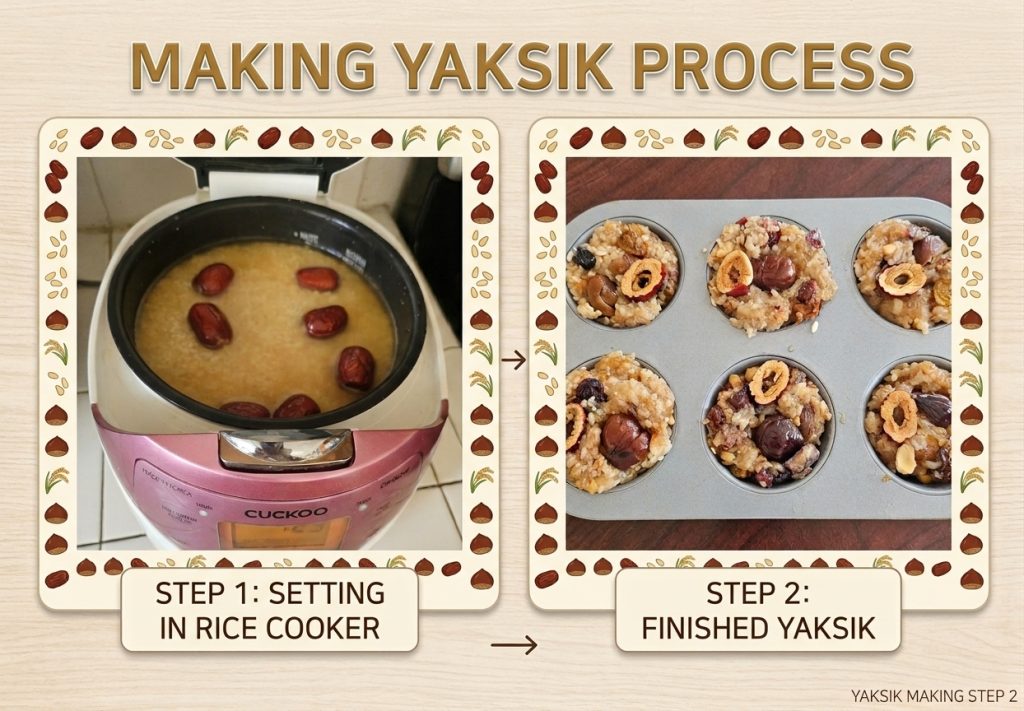
- Combine in the Inner Pot: Place the drained sticky rice into your electric rice cooker inner pot.
- Add Fillings: Add the prepared chestnuts and half of the jujubes into the pot.
- Pour Sauce: Pour the prepared sauce mixture evenly over the rice and chestnuts. Stir gently so everything is combined. (The liquid level should be slightly below the top of the rice, as soaked sticky rice does not require as much water as regular rice).
- Cook: Set your rice cooker to or White Rice Cook mode.
3. Secondary Seasoning & Steaming
- Add Nuts & Sesame Oil: Once the rice cooker cycle finishes, open the lid immediately. Add the remaining jujubes, raisins, mixed nuts, and sesame oil.
- Mix Gently: Mix thoroughly using a spatula, folding gently from the bottom up so you don't crush the chestnuts.
- Steam Mode (Optional): Close the lid and let it rest on the "Keep Warm" setting for 10–15 minutes to allow the flavors and sesame oil glaze to absorb deeply into the grains.
4. Shaping & Serving
- Cool & Shape: Transfer the warm Yaksik into a wide baking dish, muffin pan, or individual silicone molds lined with a thin layer of sesame oil or plastic wrap.
- Garnish: Decorate the top with rolled jujubes, pine nuts, or flower-cut jujubes for a beautiful presentation.
- Set & Cut: Press down gently to pack it firmly. Allow it to cool completely at room temperature, then cut into bite-sized squares or remove from the muffin mold.
Tips for Success:
- Freezing: Wrap individual portions in plastic wrap and freeze them. You can thaw them at room temperature for 1–2 hours whenever you want a quick snack!
- Color Tip: If you want a darker caramel color without adding too much sugar, ensure you use dark brown sugar or brown rice syrup.