
K-Pop, K-Dramas, and the Delicious Rise of K-Food
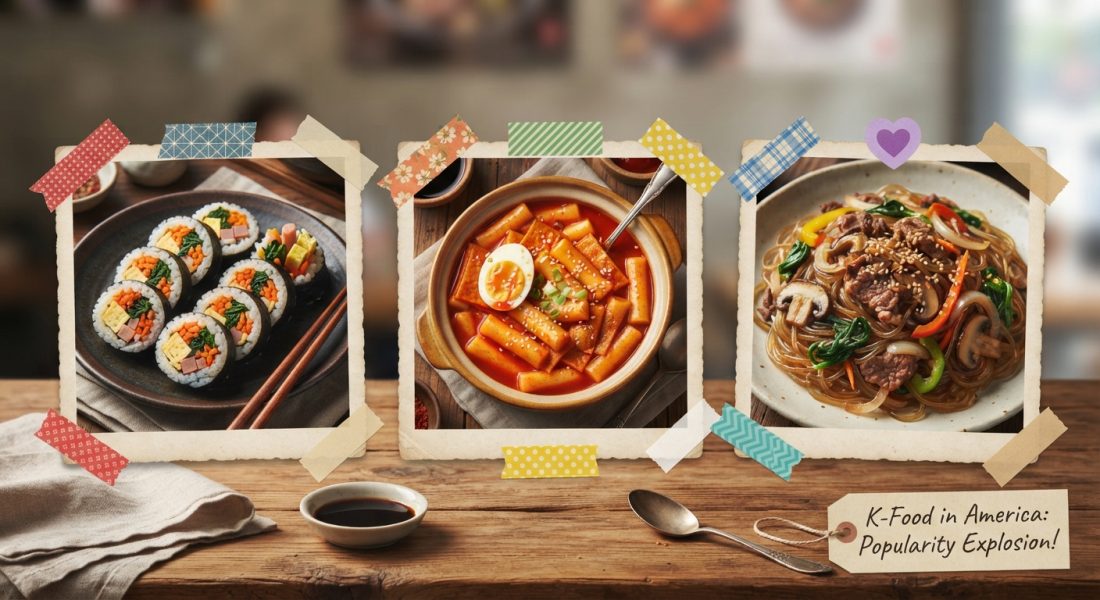
Korean food is no longer something Americans only discover at a Korean BBQ restaurant. Today, you can find Korean fried chicken, kimchi, tteokbokki, Korean corn dogs, ramen, bibimbap, Korean sauces, and snacks in restaurants and supermarkets across the United States.
And sometimes I still find myself wondering: how did this happen so quickly?
As a Korean, it feels a little funny to watch foods that were completely ordinary when I was growing up become exciting new discoveries for American diners. The stuff I ate without a second thought — the corner tteokbokki stand, the fried chicken delivery on a Friday night — is now something people are genuinely curious about, film on their phones, and line up for. It's a strange, kind of wonderful feeling to witness.
For years, many Americans associated Korean food mainly with Korean BBQ and kimchi. Today, the menu is much bigger. Korean fried chicken, corn dogs, spicy rice cakes, ramen, bibimbap, and Korean desserts are becoming increasingly familiar — and the numbers back this up in a pretty striking way.
The Numbers Behind the Trend
According to research released by Circana in September 2024, the number of Korean restaurant locations in the U.S. grew by 10% in just one year. Since 2018, roughly 450 new Korean restaurant locations have opened across the country, with over a third of them concentrated in major markets like Los Angeles, San Francisco, and New York City.
But the real story is in the specifics:
- Korean fried chicken now has seven dedicated chains operating 405 locations across the U.S. — a 22% jump from the year before, and more than double what existed back in 2019.
- Korean corn dogs have exploded even faster. Five specialized chains now run 242 locations nationwide, up 52% year-over-year. What's wild is that these chains basically didn't exist six years ago.
- Kimchi, the most classic Korean side dish of all, saw an 80% increase in retail sales case volume compared to the previous year, making it the fastest-growing vegetable category tracked in that report.
Those aren't small, gradual increases. That's the kind of growth curve you usually see with a genuine cultural moment, not just a passing food trend.
Did K-Pop Help?
Absolutely — and I think K-dramas played an important role too.
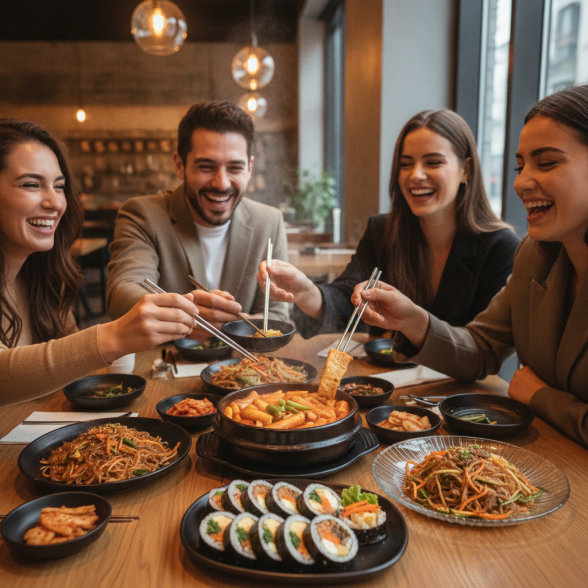
As Korean entertainment became popular around the world, people became curious about more than just music and television. They started noticing the food. A character eats ramen after a long day, slurping noodles in that oddly satisfying, almost theatrical way K-dramas love to film. Friends gather around a Korean BBQ table, laughing and grilling meat together in a scene that somehow makes viewers want to book a flight to Seoul. Someone grabs tteokbokki from a street-food stand between scenes, wrapped in a paper cup, steam rising in the cold night air. Suddenly, viewers are asking: "What are they eating?"
And once they try Korean food, many people discover how much fun it is. Korean flavors can be sweet, spicy, salty, sour, savory, and sometimes all of them in the same meal. There's crunchy fried chicken, chewy rice cake, fragrant sesame oil, spicy gochujang, and tangy kimchi. It's a cuisine that rewards curiosity — the more you try, the more layers you find.
Industry researchers actually credit this connection directly. Circana's own report ties the trend explicitly to the "Korean Wave" — the broader cultural movement that has carried K-pop and K-dramas to global prominence since the 1990s, and which platforms like TikTok have only amplified further in recent years. In other words, this isn't just my personal theory as someone watching it happen — it's something the food industry itself is actively tracking and responding to.
The Part I Love Most
For me, the most exciting part is not simply that Korean restaurants are becoming popular. It is that Korean food is becoming part of everyday American life.
You can find Korean sauces at the grocery store. You can order bibimbap in a neighborhood restaurant that has nothing else "Korean" about it. You can walk into a Korean bakery on a random Saturday morning. You can even find Korean-style convenience foods and ramen experiences in places that don't feel traditionally Korean at all — a gas station snack aisle, a college dining hall, a big-box grocery chain's frozen food section.
That's genuinely different from a "trendy" food moment. Trends come and go fast. What's happening with Korean food feels more like quiet, permanent integration — the kind of shift where, ten years from now, nobody will remember a time when gochujang wasn't sitting on the same shelf as ketchup and sriracha.
That is why I don't want K-Food Cravings to simply say: "Here is kimchi. Try it." I want to tell a bigger story. Korean food is no longer just a trend to watch. This is the food I grew up with. And now, it's becoming part of America's food story too. It is becoming a way for people to experience a little bit of Korean culture — one delicious bite at a time.
What This Looks Like on the Ground
If you want proof this isn't just a headline statistic, just look around. Grocery store shelves that used to have maybe one lonely bottle of soy sauce now stock multiple brands of gochujang, gochugaru, and doenjang. Food halls in major cities almost always have at least one Korean fried chicken or corn dog stall now. Even fast-food chains that have nothing to do with Korea have started rolling out "Korean-inspired" limited-time menu items, trying to tap into flavors that customers are already actively seeking out.
None of this happens by accident. It happens because enough people tried the food, liked it, and came back for more — and then told their friends, or posted about it, or just started cooking it at home themselves.
If You Want to Jump In, Here's Where to Start
If all of this has you curious but a little unsure where to begin, you don't need to overhaul your pantry overnight. Start small.
- Try Korean fried chicken first. It's the easiest entry point — familiar in format (it's still fried chicken), but with that signature sweet-spicy glaze that makes it impossible to stop at one piece.
- Pick up a jar of gochujang. It's incredibly versatile — stir it into mayo for a spicy dip, mix it into a marinade, or add a spoonful to your next stir-fry.
- Grab kimchi at your regular grocery store. With sales up 80%, chances are it's already sitting in your store's refrigerated section, whether you've noticed it or not.
- Watch a K-drama with food in mind. Once you start noticing the meals on screen, you'll probably find yourself craving the exact dish characters are eating within the hour.
And Perhaps the Funniest Part?
I used to ask my American friends: "Have you ever tried Korean food?"
Now, sometimes they ask me first: "Have you tried this new Korean restaurant?" One friend recently sent me a photo of a Korean corn dog she'd just discovered, genuinely excited, asking if it was "authentic." Another texted me mid-K-drama episode asking what exactly was in the bowl the main character was eating. These are conversations I never used to have.
That's when I know something has changed. It's a small moment, but it says a lot. The curiosity has flipped directions. And honestly, as someone who grew up eating this food without ever thinking twice about it, there's something really moving about watching it become something other people actively seek out, get excited about, and want to share with me.
So if you haven't jumped into the world of Korean food yet, consider this your sign. Grab some Korean fried chicken, pick up a jar of gochujang next time you're at the grocery store, or just say yes the next time a friend suggests trying that new Korean spot in town. You're not just following a trend — you're joining something that's clearly here to stay. 🙂
Sources: Circana (September 2024, "South Korean Restaurant Locations in the U.S. Grow 10% Over the Past Year Amid Surge in Demand for Korean Cuisine")