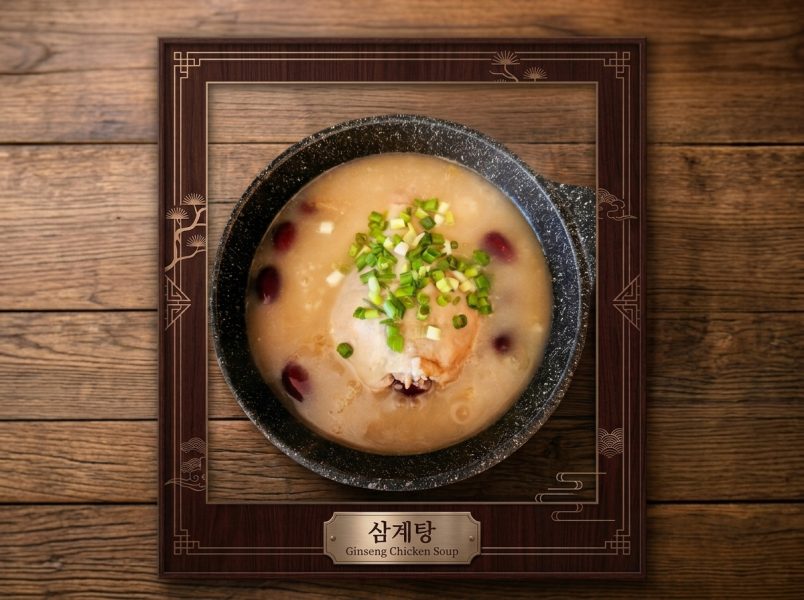

Hot soup on a Hot day?
Wait, You Eat THAT in Summer?
When summer gets hot in America, most people reach for iced coffee, ice cream, or a cold salad. But in Korea, you may see something completely different.
Even when the weather is hot enough to make you sweat, Koreans sit down with a steaming bowl of Samgyetang, a traditional Korean chicken soup. A first-time visitor might look at the bowl and ask: "Wait… you eat THAT on a hot summer day?"
Yes! And that is one of the most interesting parts of Korean summer food culture.
Koreans have a long-standing tradition called "Yi Yeol Chi Yeol" (이열치열), which can be loosely translated as "fighting heat with heat." During Chobok, Jungbok, and Malbok — the three hottest periods of the Korean summer, collectively known as sambok — Samgyetang is especially popular as a traditional summer nourishing dish.
Where Does This Tradition Actually Come From?
The idea of Yi Yeol Chi Yeol isn't just a random quirk — it's rooted in centuries of traditional Korean medicine, particularly the influence of hanbang (Korean herbal medicine), which historically believed that cooling the body too aggressively during peak summer heat could actually weaken your internal energy and digestion. Instead of fighting the heat with something cold, the philosophy encouraged warming the body from the inside to help stimulate circulation and appetite, which tends to drop when it's brutally hot outside.
The sambok days themselves date back to the Joseon Dynasty and were traditionally marked on the lunar calendar as the peak of summer's intensity. On these specific days, families would traditionally prepare a nourishing, protein-rich meal to help everyone get through the physically draining heat — and Samgyetang, with its combination of protein, rice, and warming herbs, became the go-to choice.
Why Eat Hot Soup in the Summer?
Yi Yeol Chi Yeol is less a scientific rule that says "hot food removes heat" and more a reflection of traditional Korean food culture and lifestyle.
Eating hot soup can make your body feel warmer and may cause you to sweat. As sweat evaporates, it can help cool the body. However, when the weather is extremely hot and humid, sweat may not evaporate as efficiently.
So I would not describe Samgyetang as a magical summer health food. Instead, think of it as a traditional Korean way of enjoying a warm, satisfying meal with plenty of fluids and protein during the hottest part of the year.
And honestly… Samgyetang is simply delicious.
What's Inside a Bowl of Samgyetang?
Samgyetang is traditionally made by stuffing a whole young chicken with sticky rice, garlic, jujubes, and often ginseng or other traditional herbal ingredients, then simmering it until the chicken is tender and the broth becomes rich and flavorful.
Chicken provides protein, while sticky rice provides carbohydrates for energy. Garlic, jujubes, ginseng, and other herbal ingredients add flavor, aroma, and character to the soup. Because you eat the hot broth along with the chicken and rice, Samgyetang makes a hearty and satisfying meal.
I would not describe it as a food that has special healing powers. Instead, I like to introduce it as: "Korean comfort food with nourishing ingredients."
How Does This Compare to American Comfort Food?
If Samgyetang sounds unusual, think of it as Korea's answer to chicken noodle soup — except deployed at exactly the opposite time of year. Americans typically reach for chicken soup when they're sick or when it's cold outside, treating it as recovery food for winter colds. Koreans, on the other hand, treat Samgyetang as preventative, seasonal nourishment specifically for summer, when your appetite and energy tend to dip the most.
There's also a texture and format difference worth mentioning. American chicken noodle soup is usually a lighter, brothier dish with shredded chicken and noodles mixed throughout. Samgyetang is heartier and more of a whole-meal experience — a small whole chicken, stuffed and simmered, served as its own complete dish rather than a starter or side. It's less "get well soon" soup and more "sit down, this is dinner."
Why This Dish Is Actually Good for You
- Complete protein source. A whole chicken provides high-quality protein essential for muscle maintenance and recovery, which matters even more in summer when heat can suppress appetite and lead to under-eating.
- Hydration built in. Since you're consuming both the broth and solid ingredients together, Samgyetang helps replenish fluids lost to summer sweating — arguably more effective than a cold drink that passes through quickly.
- Garlic and ginseng. Both ingredients have long been associated with immune support and circulation benefits in traditional medicine, and modern nutrition research continues to study their antioxidant properties.
- Balanced macronutrients. Between the protein from chicken, carbohydrates from sticky rice, and the herbal broth, it's a genuinely well-rounded, one-bowl meal.
My Quick & Easy Samgyetang

Traditional Samgyetang may sound like something that takes hours to prepare, but I make mine much more simply.
My version uses one 2.5-pound whole chicken, which serves about 2–3 people, one packet of Samgyetang herbal ingredients, and about 2 to 2.5 liters of water.
Here is my easy method.
1. Clean the Chicken
This is one of the most important steps for getting a clean, delicious broth without an unpleasant smell. Using kitchen scissors, trim away the tail, wing tips, and excess fat around the neck and back area. Then rinse the inside of the chicken thoroughly under running water, especially removing any remaining blood or residue from the cavity. Finally, briefly blanch the chicken in boiling water. This extra step helps create a cleaner broth and reduces unwanted odors.
2. Stuff the Chicken
Put a few whole garlic cloves and jujubes into the chicken cavity first. Then add the soaked sticky rice. I soak the sticky rice in water for at least 1 hour before cooking.
For this recipe, you'll need:
- 1 cup soaked sticky rice
- 8–10 whole garlic cloves
- 8 jujubes
You do not need to pack the cavity completely full because the rice expands as it cooks.
3. Make the Herbal Broth and Cook
In a large pot, add 2 to 2.5 liters of water and one packet of Samgyetang herbal ingredients. Bring the water to a boil over high heat, then carefully add the stuffed chicken. When the broth comes back to a boil, you will see foam and impurities rise to the surface. Skim them off carefully for about 2–3 minutes. Then cover the pot, reduce the heat to medium-low, and simmer for 50 minutes to 1 hour.
This is when the magic happens. The chicken becomes tender, the sticky rice cooks inside the cavity, and the herbal ingredients slowly flavor the broth.
4. Finish and Serve
Once the broth is fragrant and the chicken is fully cooked, remove the herbal ingredients packet. Place the chicken and broth into a serving bowl and top with finely chopped green onions. Serve with salt and black pepper on the side so everyone can season the broth to their own taste.
One important food-safety note: the chicken and the center of the stuffing should both reach 165°F (74°C). The USDA recommends checking the thickest parts of the chicken as well as the center of the stuffing when cooking a stuffed whole bird. If the food has not reached 165°F after 50 minutes to 1 hour, continue cooking until it does.
And Then Comes My Favorite Part
Take one spoonful of the steaming broth. "Wow… it's hot!" And then you take another spoonful anyway.
Before long, little beads of sweat start forming on your forehead. And that's when a Korean might smile and say: "Iyeolchiyeol! 이열치열!" Fight heat with heat.
That is Samgyetang. Hot soup. Hot summer. And somehow, it feels exactly right.
Tips for Making This Work in the U.S. 💡
- Finding ingredients: H Mart and most Korean grocery stores carry pre-packaged "Samgyetang herbal packets" that include everything you need — astragalus root, ginseng, and other traditional herbs — so you don't have to source each ingredient individually.
- Chicken size: Look for small whole chickens (sometimes labeled "Cornish hen" or "young chicken") in the poultry section. A 2.5-pound bird is ideal for this recipe.
- Make it a summer ritual: Consider marking your calendar for the sambok days each year (they shift slightly with the lunar calendar) and making Samgyetang your own personal "fight heat with heat" tradition, even outside of Korea.
- Leftover broth: Don't toss extra broth — it freezes well and makes an excellent base for a quick soup later.
Serve It My Way
For me, the perfect bowl of Samgyetang needs only a few simple finishing touches: chopped green onions, salt, black pepper, and plenty of hot, comforting broth. No complicated seasoning is necessary. Sometimes the simplest bowl is the most satisfying one.
So the next time you see the temperature climbing outside, don't be surprised if a Korean friend suggests something that sounds completely backwards: "It's really hot today. Let's have Samgyetang!"
You may think we're crazy at first. But take one bite… and you might just understand. 🙂