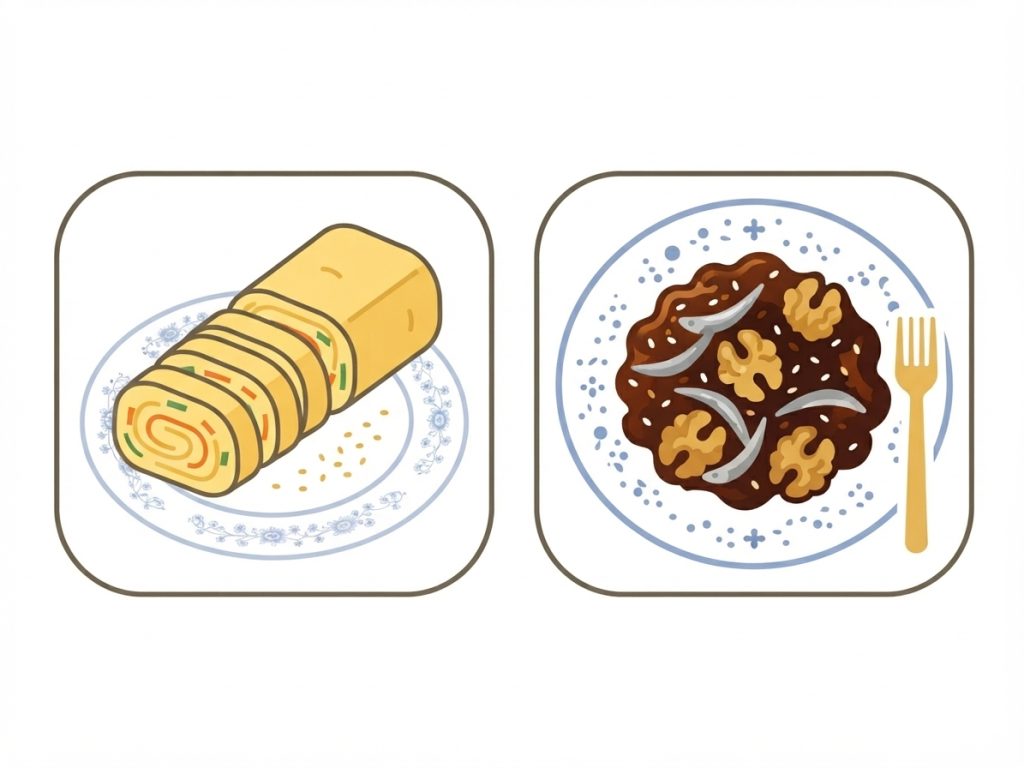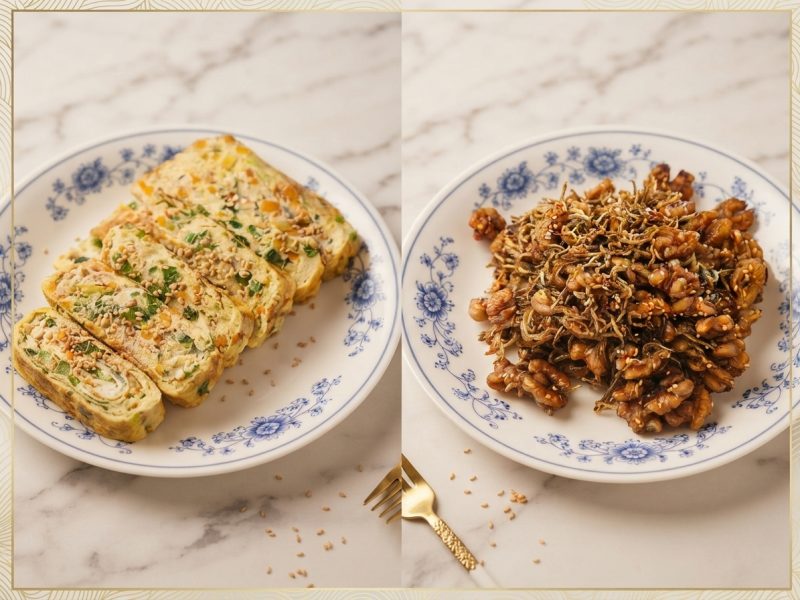

Where These Two Dishes Come From
Both of these dishes trace back to Korea's much larger banchan tradition — the practice of setting a table with an array of small side dishes alongside rice and soup, rather than one big plate of food. That tradition itself goes back centuries, rooted in a way of eating that values balance and variety over a single showstopping dish.
Myeolchi bokkeum specifically comes out of a very practical history. Dried anchovies have long been a pantry staple in Korean households because they're inexpensive, shelf-stable, and packed with flavor and nutrients — exactly the kind of ingredient a home cook could always have on hand. Pairing it with walnuts, another affordable, long-lasting ingredient, turned a humble preserved fish into something closer to a treat. Gyeranmari, meanwhile, reflects a similar home-cooking logic: eggs are quick, inexpensive, and endlessly adaptable, which is probably why the rolled omelette became such a fixture at Korean tables, from everyday dinners to special-occasion spreads to, yes, decades of school lunchboxes.
Back in middle and high school in Korea, there was no cafeteria lunch program yet — everyone packed a lunchbox from home. And here's the thing about a packed lunch: the second you crack the lid open, the smell hits the whole classroom. On days when my lunchbox had either of these two side dishes — gyeranmari (Korean rolled omelette) or hodu myeolchi bokkeum (walnut and dried anchovy stir-fry) — the smell was strong enough that I couldn't wait until lunchtime to eat it.
Technically, lunch was supposed to happen after fourth period. But by the ten-minute break after second period, I'd already cracked the lid open just enough to sneak a bite or two with my chopsticks. If I heard footsteps that sounded like a teacher walking by, I'd slam the lid shut and pretend I was doing absolutely nothing suspicious. Looking back, I was a kid quietly panicking over stolen bites of egg roll, and somehow those few bites tasted better than the entire lunch that followed. Good times.
Meet the Steady Sellers of the Korean Lunchbox
These two side dishes are basically the all-time greatest hits of the Korean packed lunch. Gyeranmari wins people over with its soft, pillowy texture, while hodu myeolchi bokkeum has that addictive sweet-salty crunch that gets kids and adults alike. Both are technically simple to make, but each one has its own timing-dependent tricky part, which is exactly why they feel a little more impressive than they actually are to pull off. And unlike a lot of Korean side dishes that need a specialty ingredient or a trip to a Korean grocery store, these two are made almost entirely from things you probably already have in your fridge and pantry.
Why These Two Are Nutritional Overachievers
Gyeranmari starts with eggs, which already qualify as a complete protein on their own, and then folds in scallions and carrots, so you're getting protein and vitamins in a single, kid-friendly bite.
Hodu myeolchi bokkeum, though, is where things get genuinely impressive. Dried anchovies are one of the best calcium sources you'll find in a home kitchen — even a small handful, about 15 to 20 grams, can provide around 15% of your daily recommended calcium intake. Walnuts bring their own superpower to the table: they're the richest source of omega-3s among all tree nuts, and a single one-ounce serving (about 14 walnut halves) delivers roughly 2.5 grams of ALA omega-3s. That's already more than the daily recommended intake for both women (1.1g) and men (1.6g), in one small handful. Put walnuts and anchovies together in one dish, and you've basically built a bone-health and brain-health side dish that just happens to taste like candy.
How This Compares to American Lunchbox Culture
American lunchboxes have their own version of this dynamic. If PB&J is the reigning champion of the American school lunch, gyeranmari holds that exact spot in Korea. The key difference: a PB&J barely changes whether it's fresh or has been sitting for hours, but gyeranmari is at its absolute best the day it's made — ideally within a few hours. As for hodu myeolchi bokkeum, the sweet-and-salty combination of nuts and protein is a pairing that doesn't really show up in American lunchbox culture at all, which honestly makes it a fun, unexpected one for American readers to try.
Recipe: Gyeranmari (Korean Rolled Omelette)
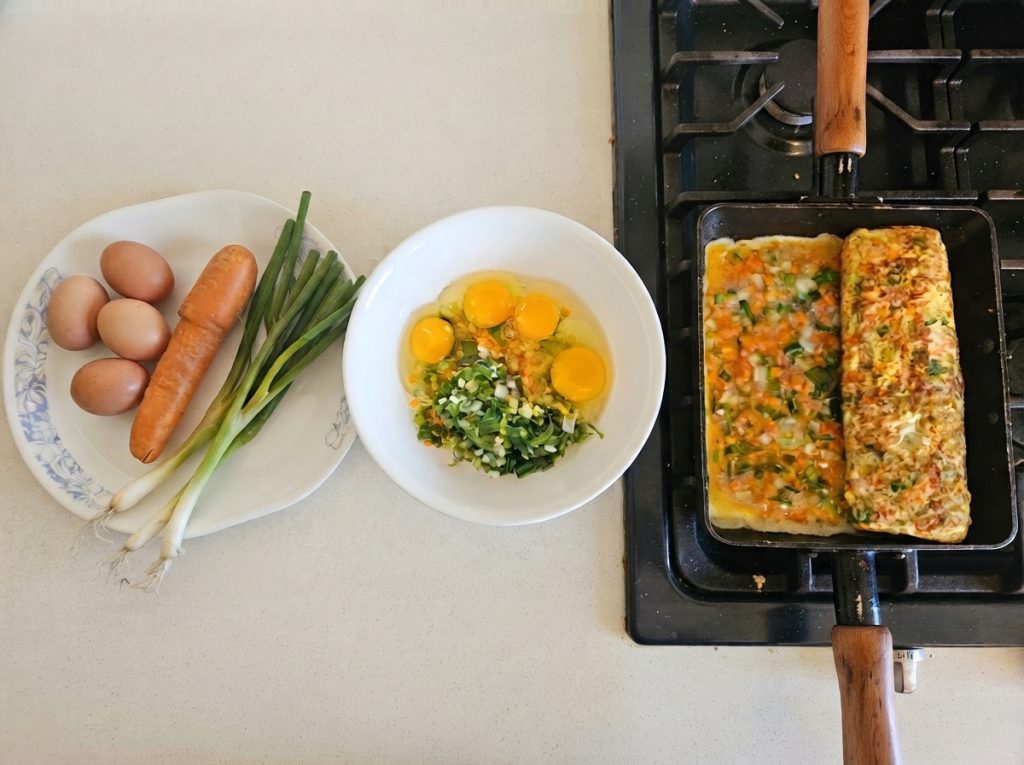
Ingredients: 4 eggs, 3 handfuls of chopped scallions, 1/2 carrot, 1/3 tsp salt, 1/3 tsp pepper
- Finely chop the scallions and carrot.
- Whisk together the eggs, scallions, carrot, salt, and pepper.
- Heat an oiled pan over low heat and pour in half of the egg mixture.
- Once it's about 80% set, pour in half of the remaining mixture while rolling the cooked portion over it.
- Pour in the last of the mixture, rolling it in the same way.
- Once fully rolled, leave it on low heat for about 2 minutes, then turn off the heat.
- Let it sit in the pan's residual heat for about 3 more minutes so the inside finishes cooking through, then slice and serve.
Troubleshooting tip: If your omelette keeps falling apart or the layers get messy, you're probably rolling too fast. Slow down — a gentle, unhurried roll is what gives you those clean, defined layers, and it's the single biggest fix for a gyeranmari that keeps failing on you.
Recipe: Hodu Myeolchi Bokkeum (Walnut and Anchovy Stir-Fry)
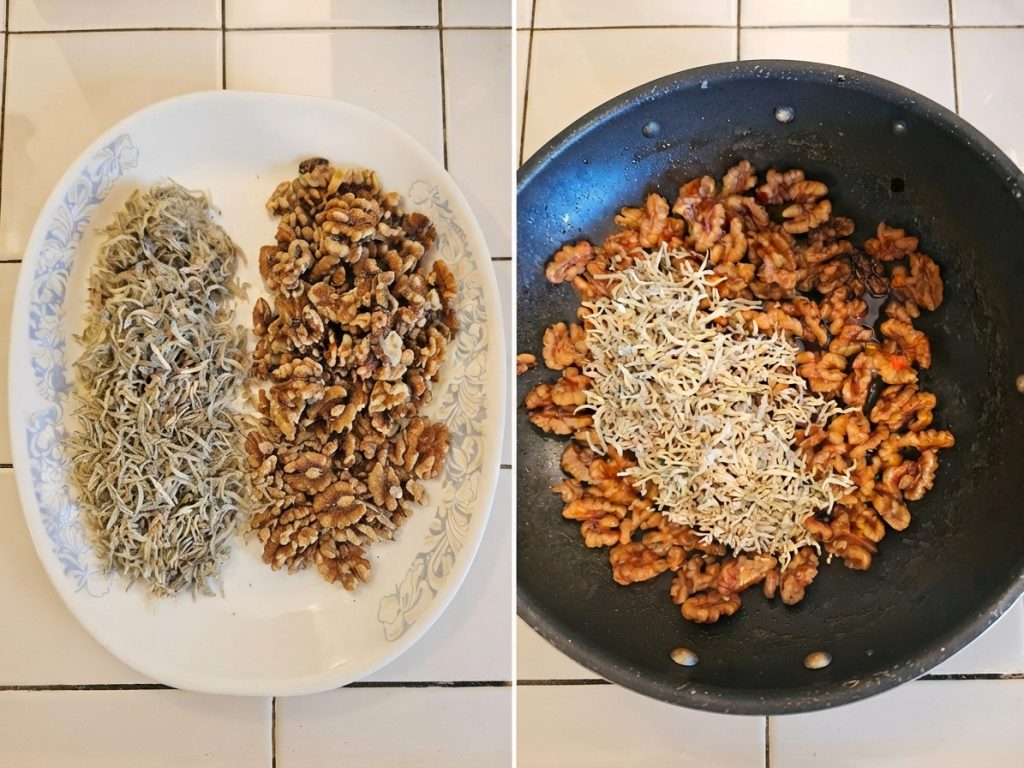
Ingredients: 3 cups walnuts, 1 cup dried baby anchovies, 1 cup water, 4 tbsp soy sauce, 3 tsp sugar, 1–2 tsp mirin (rice cooking wine), 1 tsp corn syrup (or oligo syrup/honey), 2 tbsp sesame oil, a pinch of toasted sesame seeds
- Blanch the walnuts in boiling water for about 20 seconds, then drain well.
- Dry-toast the anchovies in a pan over low heat for 2–3 minutes (no oil) to remove any fishy smell, then set aside in a strainer.
- In the same pan, bring the water, soy sauce, sugar, and mirin to a boil.
- Once it's boiling, add the walnuts and cook over medium-low heat.
- Keep cooking until about 6 teaspoons of the sauce remain, then add the anchovies.
- Raise the heat and stir-fry for about 2 minutes — the anchovies are already seasoned, so they don't need long.
- Turn off the heat, then stir in the corn syrup (or oligo syrup/honey) and sesame oil.
- Finish with a sprinkle of toasted sesame seeds.
Troubleshooting tip: If you want this to stay crunchy instead of turning soft and sticky after a day or two, mix corn syrup in with the sugar rather than using sugar alone. Sugar on its own tends to soften over time, but adding corn syrup helps the glaze hold its crisp coating much longer.
Tips for Making These in the U.S.
- Dried baby anchovies are easy to find at Korean grocery stores but rarely show up at regular American supermarkets, so stock up when you're at an H Mart or similar.
- No mirin on hand? Dry sherry or cooking sake works as a substitute.
- Rolling gyeranmari can feel tricky at first — a small rectangular Korean omelette pan (available online or at Korean grocery stores) makes the rolling process much easier than a round pan.
- Both dishes hold up well in the fridge for several days, which makes them great candidates for meal prep if you're trying to get ahead on lunches for the week.
- Serve both alongside a bowl of steamed rice and maybe one more banchan, like kimchi or seasoned spinach, for a lunchbox that feels like the real deal — no need to stop at just these two.
Between the crunch of the walnuts, the salty punch of the anchovies, and that soft, comforting bite of egg roll, it's easy to see why these two have been lunchbox staples for generations. And honestly, if you make a batch of your own, I won't judge you for sneaking a bite before lunchtime either.
Frequently Asked Questions About Korean Lunchbox Side Dishes
What Is Gyeranmari?
Gyeranmari is a Korean rolled omelette made by cooking thin layers of seasoned egg and rolling them together into a log, then slicing it into pieces. It's one of the most popular Korean side dishes for lunchboxes and everyday meals.
What Is Hodu Myeolchi Bokkeum?
Hodu myeolchi bokkeum is a Korean side dish made by stir-frying walnuts and dried baby anchovies in a sweet soy glaze. It's known for its crunchy texture and its high calcium and omega-3 content.
How Do You Keep Hodu Myeolchi Bokkeum Crunchy?
Using corn syrup alongside sugar in the glaze, rather than sugar alone, helps the coating stay crisp for longer after cooking.
Why Does My Gyeranmari Fall Apart When Rolling?
This usually happens when the omelette is rolled too quickly. Rolling slowly and gently gives the layers time to hold together properly.