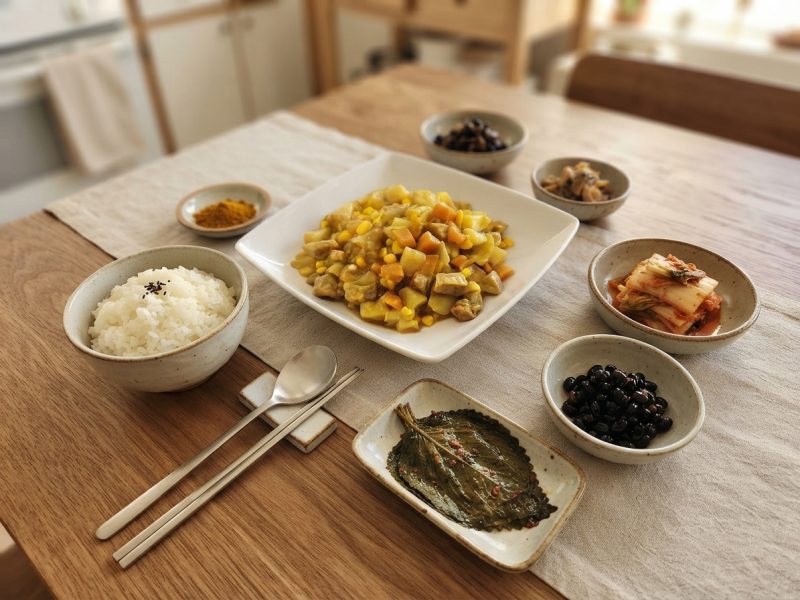

If you ask a Korean person to name their country's most iconic dishes, you'll probably hear bibimbap, bulgogi, kimchi jjigae. Curry rice almost never makes that list — and that's exactly the problem, because it absolutely should. Ask any Korean about their childhood dinners and there's a very good chance curry rice shows up in the top five. It's the dish you make when you don't want to think too hard, when there's a church potluck to pull together, or when you just want something warm, mildly sweet, and completely unfussy. It's less "celebrated national dish" and more "the one your mom made every other Tuesday without anyone ever questioning it" — which, honestly, might be an even bigger compliment.
Nobody hypes up curry rice. Nobody posts dramatic close-up shots of it dripping with cheese pulls or lava-like sauce. It just quietly shows up, feeds everyone, and disappears into the rotation again next week, no fanfare required. If bibimbap is the dish Korea shows off to the world, curry rice is the dish Korea actually eats on a random Wednesday — and honestly, that gap between "famous" and "beloved" is kind of the whole story here.
Wait, Curry Isn't Even Korean — So What's the Story?
Here's the plot twist: Korean curry rice has had quite the journey before it ever touched a Korean table. Curry itself started in India, got reinterpreted by the British during the colonial era, and made its way to Japan during the Meiji era, where it was adapted into what's now known as Japanese curry rice. Korea picked it up from there.
Curry was first introduced to Korea in the 1940s, but it didn't really take off. The real turning point came in 1969, when a company called Poonglim Trading — which would later become the food giant Ottogi — released Korea's first domestically made curry powder. That single product basically invented Korean curry rice as a home-cooking staple. Then in 1981, Ottogi struck again, introducing Korea's first retort-pouch instant curry, branded "3 Minutes," which made curry rice even more convenient and helped cement it as an everyday dish rather than a special occasion one.
So the dish making its way into your bowl tonight has technically traveled from India, through Britain, through Japan, before finally landing in Korea and becoming a full-blown household staple. Not bad for something most people don't even think to mention when they talk about Korean food.
What's interesting is how thoroughly Korea made the dish its own despite the roundabout journey. Korean curry rice isn't a carbon copy of Japanese curry — over the decades, it developed its own identity: lighter, a little sweeter, and typically less oily than the Japanese version, which tends to rely on a fattier roux base. It's a good reminder that "borrowed" and "authentic" aren't actually opposites. A dish can start out imported and still end up genuinely, unmistakably Korean by the time it reaches your table.
Why Curry Rice Earns Its Spot at the Table
Part of the appeal here is just how balanced the dish is without trying very hard to be. You've got protein (meat), vegetables (potato, carrot, onion), and carbs (rice) all in one bowl — basically a complete meal without any extra planning required. Curry powder itself is turmeric-based, and turmeric is widely known for its antioxidant properties, which gives curry rice this nice little bonus of feeling indulgent and vaguely virtuous at the same time.
There's also a strong nostalgia factor at play. For a lot of Koreans, curry rice is tied directly to childhood — school cafeteria lunches, Sunday dinners, the one dish every kid would actually finish without complaint. Making a pot of it as an adult tends to summon that same comfort almost instantly, which is probably part of why it's stuck around as a staple for decades instead of fading into a retro trend.
It also helps that curry rice is about as forgiving a dish as exists in the Korean kitchen. Got slightly too much carrot and not enough potato? Fine. No corn on hand? Also fine. It's one of those recipes where "close enough" still turns out great, which makes it a low-stakes, low-stress entry point for anyone a little intimidated by Korean cooking in general.
How This Compares to American Curry Expectations
When Americans hear "curry," they usually picture something fiery — Indian curry, Thai curry, dishes built around heat and bold spice blends. Korean curry rice is going to throw you for a loop if that's what you're expecting. It's mild, a little sweet, and much gentler than its Indian or Thai cousins. If you go in anticipating a spice bomb, you might actually be a little disappointed — or relieved, depending on your spice tolerance.
A better mental comparison for American readers might be beef stew with gravy, or a classic pot roast — something warm, filling, and comforting rather than aggressively seasoned. The curry flavor is unmistakably there, but it's doing a very different job than the curries most Americans are used to. Think "weeknight comfort food" rather than "bold statement dish."
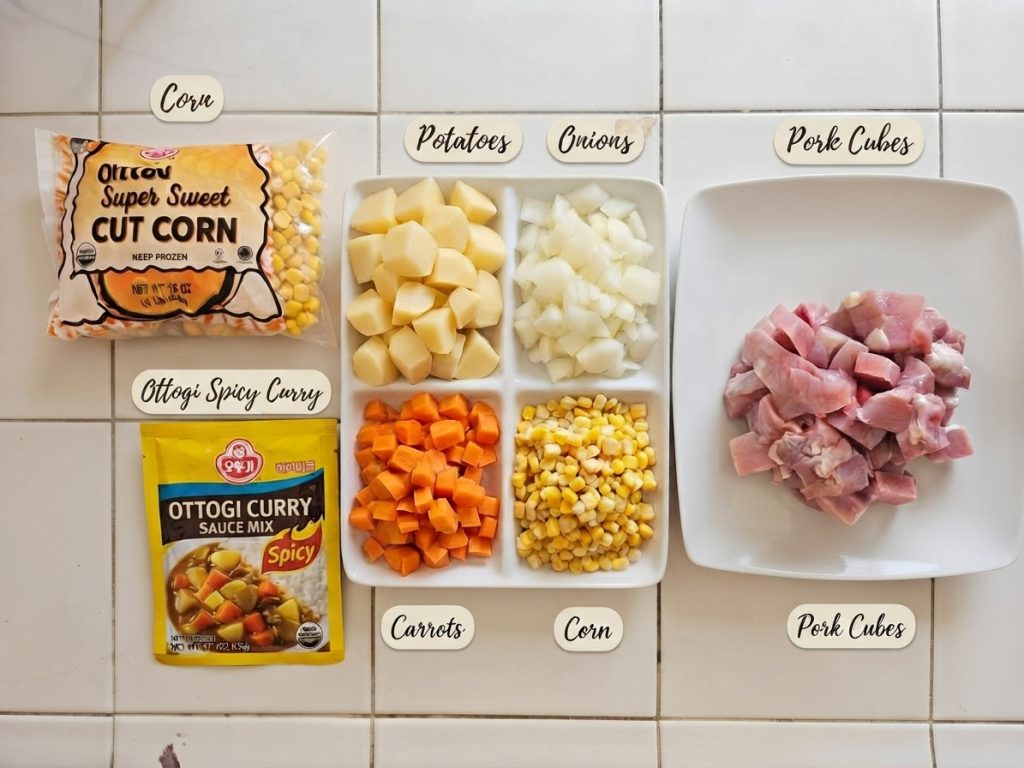
Recipe: Korean Pork Curry Rice (Serves About 6)
Ingredients: 1 packet Korean curry powder, 1 lb (about 500g) pork (beef works too), 2 potatoes, 1 carrot, 1/2 onion, sweet corn kernels (as much as you like), rice wine (or mirin), salt, and pepper for the meat, cooking oil, 4–6 cups water
- Cut the potatoes and carrot into bite-sized cubes. Chop the onion into similarly sized pieces.
- Slice the pork into small pieces and season lightly with rice wine, salt, and pepper. Let it sit for a few minutes.
- Heat a little oil in a pot and sauté the potatoes first. Pre-cooking them this way keeps them from falling apart later when everything simmers together.
- Sauté the carrot next. The oil helps your body absorb more beta-carotene from it, so this step isn't just about flavor.
- Sauté the onion until it turns translucent.
- Add a little more oil and cook the pork until it's about 80% done.
- Combine all the sautéed ingredients and the sweet corn in the pot.
- Add the curry powder and 4 to 6 cups of water.
- Cover and simmer over medium-low heat for about 30 minutes.
Tip: Sautéing each ingredient separately before simmering is the real trick here — it keeps the potatoes intact, boosts the carrot's nutrient absorption, and deepens the overall flavor. The sweet corn adds a fun little pop of texture that makes this an easy sell for kids (and honestly, adults too).
How to Enjoy Korean Curry Rice in the U.S.
- Look for Ottogi curry powder at a Korean grocery store, H Mart, or online through Amazon — it's the most widely used and widely loved brand in Korea for a reason.
- Japanese curry blocks (S&B, House Foods, etc.) can work as a substitute, but they tend to be richer and more oily. If you want that lighter, less heavy Korean-style flavor, stick with Ottogi's powder.
- Korean curry powder usually comes in a few spice levels. If you're new to it, start with mild — you can always work your way up.
- Make a big batch and let it sit in the fridge overnight before eating the leftovers. Like most curries, it somehow tastes even better the next day.
- It freezes well too, so a double batch isn't wasted effort — portion it out and you've got instant weeknight dinners for weeks.
- Serve it the traditional way: ladled generously over a bowl of steamed white rice, not mixed in beforehand. Half the fun is watching the curry slowly soak into the rice as you eat.
Curry rice might not have the flashy reputation of bibimbap or the viral fame of kimchi, but it's quietly done more heavy lifting in actual Korean households than almost anything else on this blog. It's humble, it's a little bit borrowed from everywhere, and it's exactly the kind of unglamorous, reliable comfort food that deserves way more credit than it gets.
Frequently Asked Questions About Korean Curry Rice
Is Korean Curry Rice Spicy?
Generally, no. Korean curry rice is mild and slightly sweet compared to Indian or Thai curry, though it does come in a few different spice levels depending on the brand.
Where Did Korean Curry Rice Come From?
Curry originated in India, was adapted by the British, and then reinterpreted in Japan as curry rice. Korea adopted the dish from Japan, with Ottogi releasing the first Korean-made curry powder in 1969.
What's the Best Brand of Korean Curry Powder?
Ottogi is the most popular and widely used Korean curry brand, having introduced Korea's first domestic curry powder in 1969 and the country's first instant retort curry in 1981.
Can I Use Japanese Curry Blocks Instead of Korean Curry Powder?
Yes, though Japanese curry blocks tend to be richer and more oily. Korean curry powder gives a lighter, less heavy result if that's the flavor you're after.