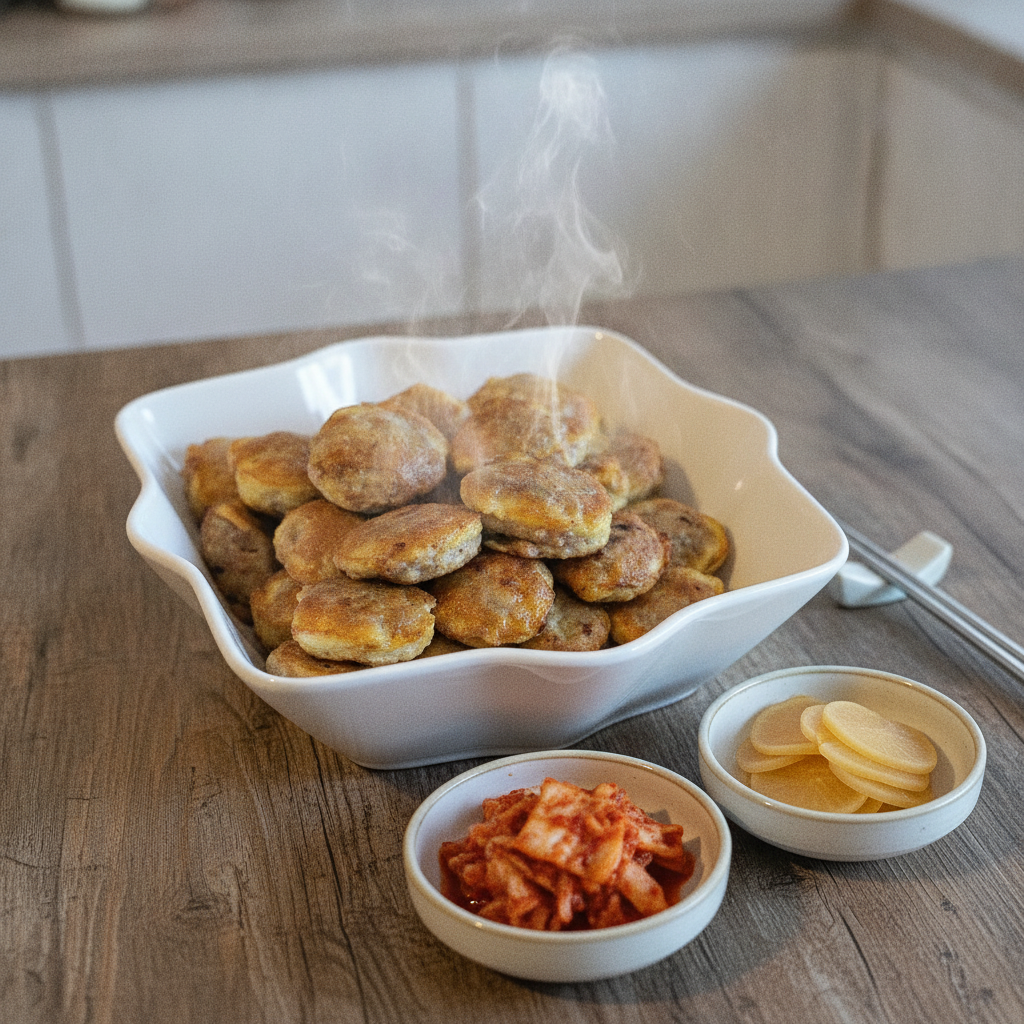

Korean Meatballs 101: What Is Donggrangttaeng?
Spaghetti and meatballs. Meatball subs. Swedish meatballs at IKEA (don't lie, we've all been there). In American kitchens, the humble meatball is basically a national comfort food. But here's a fun fact: Korea has its own version of meatballs too — a traditional Korean meat patty called donggrangttaeng (동그랑땡). Try saying that three times fast!
If you've never heard of Korean meatballs before, you're about to fall in love. Unlike Western meatballs, this easy Korean side dish recipe uses tofu instead of breadcrumbs, giving it a lighter, more delicate texture. It's also a beloved dish for Korean holidays like Chuseok (Korean Thanksgiving) and Seollal (Lunar New Year).
Both dishes are round, both are meaty, and both make you feel instantly at home when you smell them cooking. But dig a little deeper and you'll find these two dishes couldn't be more different in how they're made, why they exist, and how they taste. Let's dig into the history, the health benefits, and — most importantly — a step-by-step donggrangttaeng recipe you can make in your own American kitchen.
The History Behind This Traditional Korean Recipe
Here's where things get interesting. American and European meatballs largely evolved as a practical way to stretch meat further and use up scraps — economical, hearty, everyday food. Donggrangttaeng, on the other hand, comes from a completely different culinary tradition: Korea's jeon (전) culture, meaning pan-fried dishes.
The name itself has a charming backstory. It's believed to have originated from "donjeon" (돈전), an older term for these Korean fried meat patties, which eventually merged with the word "donggeuratta" (동그랗다), meaning "round," giving us the playful, almost onomatopoeic name we use today — dongGRANGttaeng.
But here's the real kicker: unlike meatballs, which are pretty much an everyday food, donggrangttaeng has deep roots in Korean ancestral rites and holiday tables. Fried foods (jeon) have historically been considered special, almost sacred offerings in Korean culture — the kind of dish you'd prepare for jesa (ancestral memorial rites) or set proudly on the table during Chuseok. For many Koreans, the smell of this Korean holiday food sizzling in a pan isn't just dinner — it's grandma's kitchen, holiday mornings, and family gathered around a crowded table. It's nostalgia you can eat.
Korean Meatballs vs. American Meatballs: Key Differences
| Meatballs 🇺🇸 | Donggrangttaeng 🇰🇷 | |
|---|---|---|
| Cooking method | Boiled, baked, or simmered in sauce | Coated in egg, pan-fried (jeon-style) |
| Binding ingredient | Breadcrumbs, parmesan cheese, herbs | Tofu, carrots, sesame oil |
| Flavor profile | Built around the sauce (marinara, gravy, sweet & sour) | Nutty, savory — flavor comes from the patty itself |
| How it's eaten | Main dish | Side dish, holiday food, or drinking snack (anju) |
The single biggest difference between this Korean tofu meatball and its American cousin? Tofu. American meatballs typically use breadcrumbs to add moisture and bulk. Korean donggrangttaeng uses tofu instead — and this one swap changes everything, making the patty noticeably lighter, softer, and more delicately savory than a dense, bread-bound meatball.
And then there's the cooking technique. Meatballs are usually simmered or baked and finished in sauce. Donggrangttaeng gets a completely different treatment: each patty is dusted in flour, dipped in beaten egg, and pan-fried until the outside turns golden and slightly crisp while the inside stays juicy and tender. That contrast — crispy egg coating outside, soft savory filling inside — is a texture you simply don't get with a classic American meatball.
Why This Korean Meatball Recipe Is Healthier Than You Think 🥗
- Tofu cuts the fat, adds protein. By replacing some of the meat volume with tofu, you naturally lower the overall fat and calorie content while boosting plant-based protein.
- Carrots bring the vitamins. Finely minced carrots pack in beta-carotene and antioxidants, something your average meatball recipe definitely isn't doing.
- Pan-fried, not deep-fried. Donggrangttaeng is cooked in a thin layer of oil in a pan, not submerged in a deep fryer. That means significantly less oil absorption compared to deep-fried meatballs or croquettes.
- A smart mix of beef and pork. This Korean recipe with ground beef and pork gives you the iron benefits of beef alongside the vitamin B1 (thiamine) that pork is known for — a more balanced nutritional profile than using just one type of meat.
Basically, you get all the satisfaction of a hearty, protein-packed dish without it sitting in your stomach like a brick. This healthy Korean meatball recipe is proof that comfort food and nutrition can absolutely coexist.
Donggrangttaeng Recipe: Ingredients (Serves 6–7)
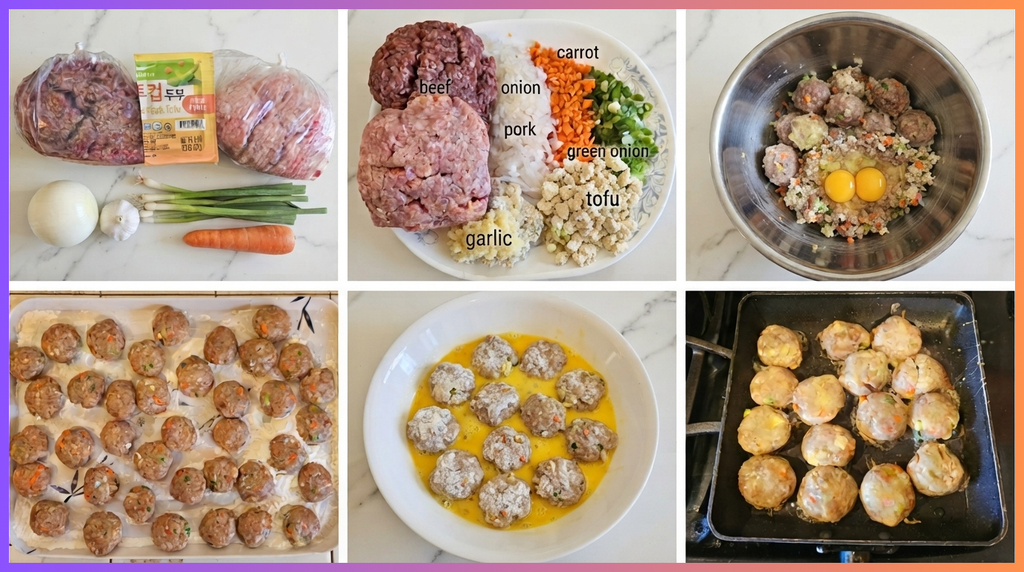
- 1 lb ground beef
- 1 lb ground pork
Main protein
Vegetables & tofu
- ½ block firm tofu
- ½ carrot, finely minced
Binding mixture
- 2 eggs
- 3 tbsp flour (or cornstarch)
- 1 tbsp minced garlic
Seasoning
- 3 tbsp soy sauce
- 1 tbsp sesame oil
- 1 tbsp salt
- Pinch of black pepper
For frying
- Flour, for dusting
- 3 eggs, beaten (for the egg coating)
- Cooking oil
How to Make Korean Meatballs Step-by-Step
- Drain the tofu — this step is non-negotiable. Wrap the tofu in cheesecloth or paper towels and squeeze out as much liquid as possible. This is genuinely the most important step in the whole recipe. Skip it, and your mixture turns mushy and won't hold its shape when you try to form patties.
- Combine the base mixture. In a large bowl, combine the drained tofu, minced carrots, ground beef, and ground pork.
- Season and knead. Add the minced garlic, soy sauce, sesame oil, salt, and pepper. Knead everything together by hand until it becomes sticky and well combined. This kneading step activates the proteins in the meat so your patties hold together instead of falling apart in the pan.
- Shape into patties. Scoop out about 1–2 tablespoons of the mixture at a time and shape into small, thick, round patties — think slider-sized, not meatball-sized.
- Coat in flour, then egg. Lightly dust each patty in flour, shaking off the excess, then dip it into the beaten egg until fully coated.
- Pan-fry to golden perfection. Heat oil in a pan over medium-low heat. Fry the patties for 2–3 minutes per side until golden brown and cooked through. Resist the urge to crank the heat — medium-low ensures the inside cooks fully before the outside burns.
Where to Buy Korean Ingredients in the U.S. (H Mart, Trader Joe's & More) 💡
- Finding tofu: Head to H Mart, Trader Joe's, or the Asian foods aisle of most major grocery chains and grab "firm tofu" — that's the one you want, not silken.
- Ground meat shortcut: Don't want to buy beef and pork separately? Look for "meatloaf mix" at the grocery store (usually a pre-blended combo of beef, pork, and sometimes veal) — it gets you a similar flavor profile with one less step.
- Soy sauce swap: Using a low-sodium soy sauce gives you more control over the saltiness, especially if you're seasoning to taste as you go.
- Meal prep and freeze: Make a big batch and freeze the patties before the egg-coating step. When you're ready to eat, just thaw, coat in egg, and fry fresh. This Korean food for meal prep fits perfectly into the American freezer-stash lifestyle.
- How to serve it: Donggrangttaeng is delicious on its own, but if you want to lean into American flavor pairings, try dipping it in ketchup or a spicy sriracha mayo. It also makes a fantastic addition to kids' lunchboxes or as a party appetizer — trust me, they disappear fast.
FAQ: Everything You Need to Know About Korean Meatballs
What is donggrangttaeng in English?
Donggrangttaeng roughly translates to "round meat patty." It's often referred to as Korean meatballs, Korean meat pancakes, or Korean fried meat patties in English.
Is donggrangttaeng healthy?
Yes! Compared to traditional American meatballs, donggrangttaeng is generally lighter thanks to the tofu, contains added vegetables like carrots, and is pan-fried rather than deep-fried — making it a lower-fat, higher-protein alternative.
Can I freeze Korean meatballs?
Absolutely. Shape the patties and freeze them before coating in egg. When ready to eat, thaw, coat in egg, and pan-fry as usual.
What's the difference between jeon and donggrangttaeng?
Jeon is a broader category of Korean pan-fried dishes (including vegetable jeon, seafood jeon, etc.), while donggrangttaeng specifically refers to the round, egg-coated meat patty version.
What can I substitute for firm tofu?
If you can't find firm tofu, you can substitute with extra breadcrumbs or panko, though the texture will be denser and less traditional.
Final Thoughts
If meatballs are all about melting into a rich, saucy dish, donggrangttaeng is the opposite philosophy — letting the natural nuttiness and savory depth of the ingredients speak for themselves, no sauce required. It's crispy, it's tender, it's got that irresistible golden egg crust, and it comes with a side of Korean holiday nostalgia baked right in.
So this weekend, instead of reaching for your usual meatball recipe, why not give this authentic Korean food recipe a try? Your taste buds — and your Instagram feed —will thank you. 🙂