
The Day I Found Kimchi at Costco
Okay, I have a confession to make. When I first moved to the U.S., putting kimchi in my fridge stressed me out more than it should have. Every time I opened that fridge door, the smell would hit the whole kitchen, and honestly, I used to worry what my coworkers or neighbors would think if they ever caught a whiff. There was this quiet, nagging self-consciousness about it that I carried around for years.
Here's a fun fact: Korean kids start eating kimchi as early as their first birthday — but through a gradual process. Around age 1 to 3, toddlers eat mild versions like baek kimchi (white kimchi) or "washed kimchi" — regular kimchi rinsed and finely chopped to remove the spice. By age 4 or 5, as their palates adjust, kids start eating small amounts of the real, unrinsed thing. By elementary school, most are eating it right alongside the adults.
Nobody sits a five-year-old down for "kimchi training." It just happens naturally, meal after meal. That gradual exposure is exactly why Koreans grow up loving kimchi instead of just tolerating it. It's not just a side dish — it's woven into a Korean life from the very first birthday.
There's something almost funny about that whole journey — a food I used to feel a little self-conscious about is now something you can grab at basically any American grocery store. So today, let's talk about what is kimchi actually is, why Koreans can't imagine a meal without it despite that famously strong smell, and how it went from "that smelly thing in my fridge" to something even The New York Times and The Washington Post are writing entire features about.
Kimchi Starts Before You Can Even Talk
Here's a fun fact that shows just how deep kimchi runs in Korean culture: Korean kids typically start eating kimchi around age three or four, once they've moved past toddler food and onto regular meals. Of course, it's finely minced or rinsed to tone down the spice first — nobody's handing a three-year-old a full spoonful of gochugaru. But essentially, Koreans grow up eating kimchi from early childhood all the way through their entire lives. It's not just a side dish. It's basically woven into the entire arc of a Korean life.
The History: Way Older Than You'd Think
Kimchi's history actually stretches back around 2,000 years, to Korea's Three Kingdoms period. Now, before you picture that fiery red cabbage dish — that's not what kimchi originally looked like. Early kimchi was just vegetables preserved in salt, a practical solution born out of necessity. Before refrigerators existed, salting vegetables was simply how you kept them edible through a long, harsh winter.
Here's the part that surprises people: the spicy, red-pepper-flake version we all know today is actually a relatively recent invention. Chili peppers didn't even arrive in Korea until after the Japanese invasions of the 1590s — so we're talking roughly 400 years ago. For most of kimchi's history, it wasn't spicy at all. Kind of wild to think about, right?
There's also gimjang, a huge annual tradition where families and neighbors gather in late autumn to make massive batches of kimchi together to last through the winter. This communal kimchi-making tradition is such a significant piece of Korean cultural heritage that UNESCO officially recognized it as an Intangible Cultural Heritage of Humanity back in 2013.
What Is Kimchi? More Than One Kind, Actually
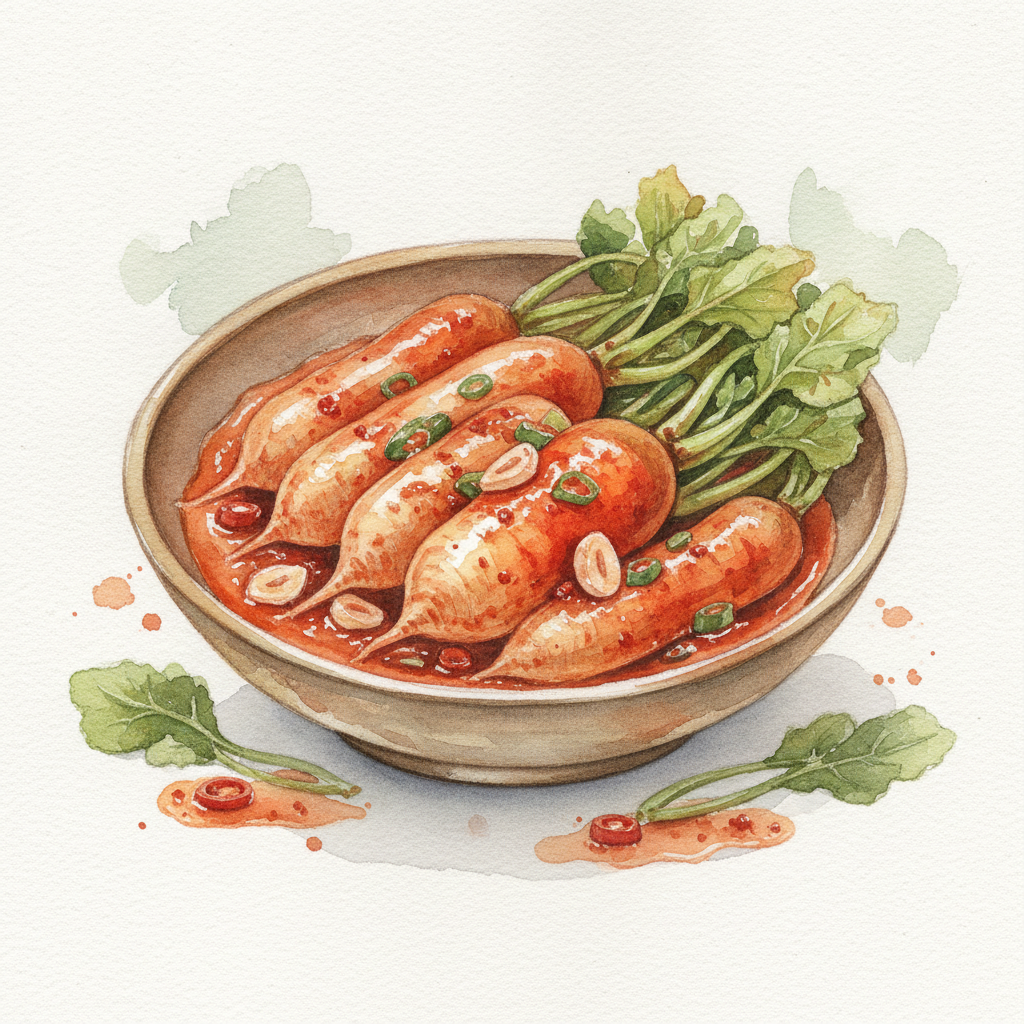
Most Americans picture one thing when they hear "kimchi" — that classic red napa cabbage version. But Korea actually has over 200 documented varieties of kimchi. Here are a few of the standouts:
- Baechu kimchi — the classic napa cabbage version most people picture
- Kkakdugi — cubed radish kimchi with a satisfying crunch
- Chonggak kimchi — made with whole baby radishes, stems included
- Baek kimchi — a "white" kimchi made without any chili flakes, mild and refreshing
- Mul kimchi — a watery, brothy kimchi, especially popular in summer
- Pa kimchi — made from scallions, with a sharp, pungent bite
Kimchi Health Benefits: The Science Behind That Strong Smell
Here's where the irony really hits, and where we finally get into the real kimchi health benefits. The exact smell I used to feel weirdly embarrassed about is actually solid proof that kimchi is a living, breathing fermented food — and major American publications have been digging into the science behind it.
The New York Times
The NYT has repeatedly spotlighted kimchi alongside yogurt and kombucha as one of the go-to "gut-healthy fermented foods." Their coverage points to beneficial bacteria like Lactobacillus, produced during fermentation, which help maintain a healthy gut microbiome and support immune function. They've also covered the broader trend of kimchi showing up as a health food staple in major American grocery chains.
The Washington Post
The Washington Post went even deeper, exploring the science behind onggi, the traditional Korean earthenware pots used for fermentation. Their reporting highlighted how the microscopic pores in onggi pottery let the container "breathe," creating the ideal environment for beneficial bacteria to thrive — which they credited as the secret behind kimchi's signature tangy, complex flavor.
Health and Medical Outlets (Healthline, Northwell Health, and others)
Health publications regularly update their coverage on kimchi's specific benefits, backed by clinical research, including:
- Immunity and anti-inflammation: Lactobacillus bacteria, combined with antioxidant compounds in garlic, ginger, and chili peppers, have been linked to reduced chronic inflammation and increased immune cell activity.
- Metabolic health and weight management: Being high in fiber and low in calories, kimchi has been studied for its potential role in improving cholesterol levels and helping prevent metabolic syndrome.
So really, that smell I used to be self-conscious about? Turns out it was just kimchi fermented food doing exactly what it's supposed to do — the kind of health food that The New York Times and The Washington Post would eventually go out of their way to write about.
Why Is the Whole World Suddenly Obsessed With This Kimchi Fermented Food?
A few things have converged to put kimchi on the global map:
- The fermented food boom. As sauerkraut and kombucha gained popularity in the West as gut-health staples, kimchi rode that same wave naturally — hence all that NYT coverage.
- The Hallyu wave. As K-pop and K-dramas have exploded in popularity, curiosity about Korean culture as a whole — including food — has followed right along with it.
- The plant-based trend. Traditional napa cabbage kimchi (minus any fish sauce or shrimp paste) can be entirely vegetarian, which lines up nicely with the growing plant-based movement in the U.S.
How to Actually Enjoy Kimchi in the U.S. 💡
- Managing the smell: Store kimchi in an airtight container (glass works best) and keep it toward the back of the fridge, away from other food. If you're really smell-conscious, a small dedicated "kimchi fridge" — yes, these exist and are sold at H Mart — is a genuine game-changer.
- Where to buy it: You genuinely don't need a Korean grocery store anymore. Costco, Whole Foods, Trader Joe's, and most major chains now carry at least one brand in the refrigerated section.
- Beyond the side dish: Kimchi isn't just something you eat straight from the container. Try folding it into grilled cheese sandwiches, mixing it into scrambled eggs, topping a burger with it instead of pickles, or stirring it into mac and cheese for a tangy kick.
- Start mild if you're new to it. If the smell or tang feels intense at first, baek kimchi (the non-spicy white version) is a gentler entry point before working your way up to the classic spicy stuff.
- Let it ferment more, on purpose. Older, more sour kimchi is actually perfect for cooking — think kimchi fried rice, kimchi stew, or kimchi pancakes. Don't toss it just because it's gotten extra tangy; that's exactly when it shines in cooked dishes.
Final Thoughts
Looking back, it's a little funny how much energy I used to spend worrying about a smell that, it turns out, was a sign of something genuinely good for me — good enough that some of the biggest newspapers in America eventually caught on too. If a jar of fermented cabbage can go from "the thing I hide in my fridge" to a Costco shelf staple, maybe it's worth giving it a real chance in your own kitchen. Next time you're at the grocery store, grab a jar, and don't be afraid of the smell — that's just kimchi doing its job. 🙂