
Ordering Donkatsu Used to Be a Big Deal
Forty years ago in Korea, if you told your friends you went out to a real restaurant and had donkatsu (Korean pork cutlet), you'd get a little bit of respect for it. Back then, eating out just wasn't the common thing it is today, and jajangmyeon (black bean noodles) was pretty much the go-to "big treat" meal. Donkatsu was a whole level above that — a genuinely special-occasion dish, and honestly, kind of pricey too.
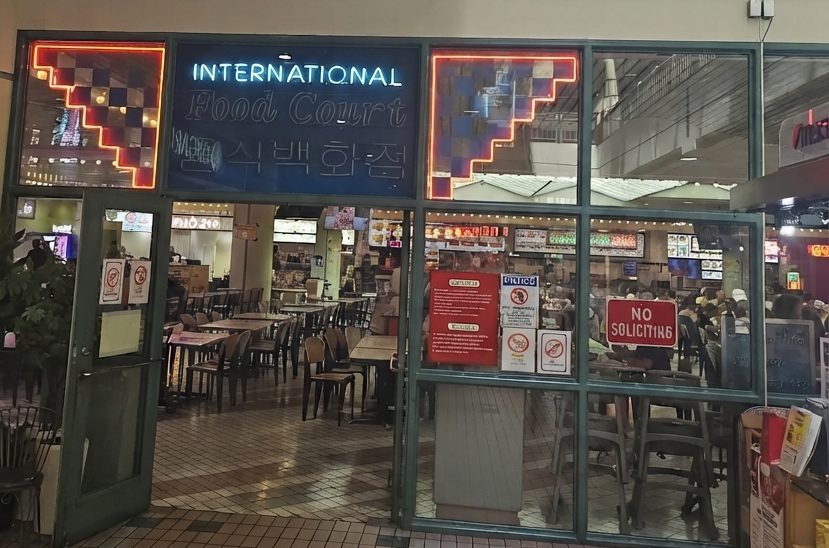
Since moving to the U.S., I've tried plenty of different takes on donkatsu. But finding that exact nostalgic flavor — the real, old-school Korean-style donkatsu I grew up with — turned out to be surprisingly hard. That is, until I found it in the basement food court of Koreatown Plaza in LA.
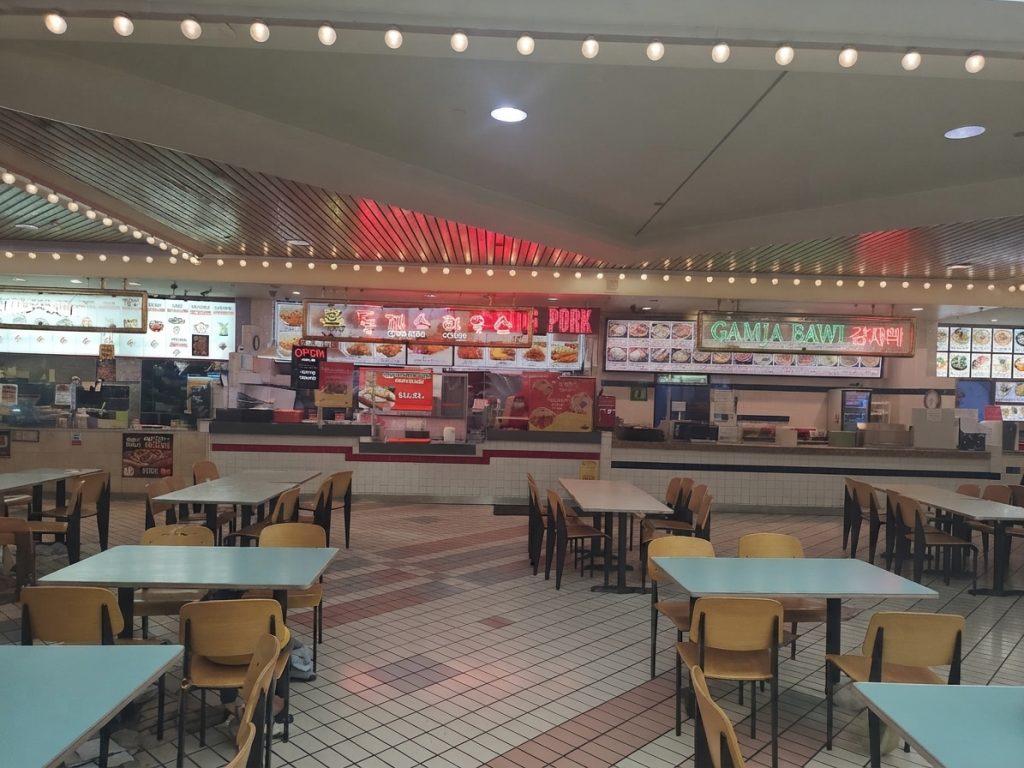
The place is called Donkatsu House. This food court has a solid lineup of Korean comfort food — naengmyeon, sundae-guk (blood sausage soup), gamjatang (pork bone stew), even corn dogs — but there's one specific reason people line up here: that unmistakable, honest-to-goodness Korean donkatsu flavor. It's already become a well-known name-drop among Korean locals. So today, I want to introduce you to it, plus dig into how this dish actually made its way from Japan to becoming a full-blown Korean comfort food icon — and why it's more nutritious than you'd think.
The History: Yes, It Started in Japan — But It's Fully Korean Now
Here's a fun bit of food history: donkatsu's roots actually trace back to Japan. In the early 1900s, Japan adapted the Western breaded cutlet into its own dish called tonkatsu (とんかつ). This made its way to Korea during the Japanese colonial period, and from there, it took on a life entirely its own.
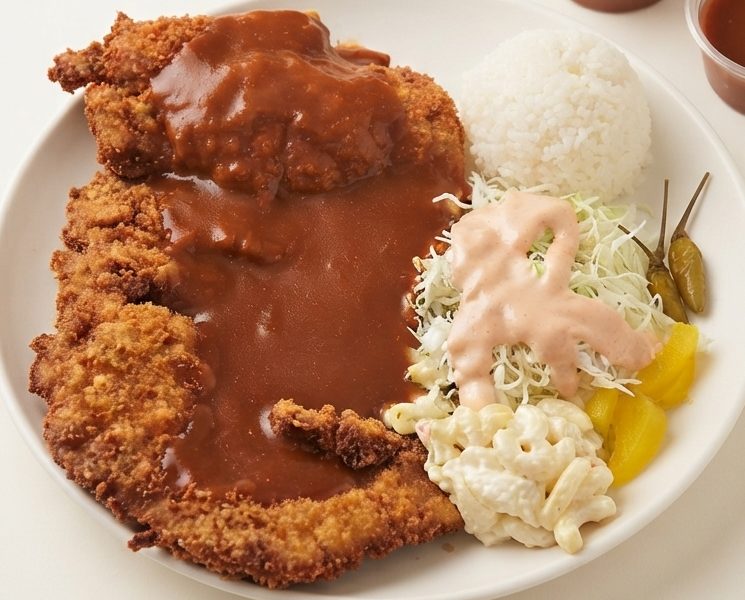
Korean-style donkatsu really came into its own during the 1970s and '80s, alongside the rise of gyeongyangsik — a uniquely Korean reinterpretation of Western-style dining that emerged as Korea's middle class grew and dining out became a bigger part of daily life. Gyeongyangsik restaurants served things like cream pasta, hamburger steak, and donkatsu, all filtered through a distinctly Korean lens: sweeter, saucier, and served with a side of white rice instead of bread. The sauce evolved into something sweeter and thicker, more of a demi-glace style, and the cutlet itself grew to a size that could cover an entire plate — giving birth to what Koreans now affectionately call "wang donkatsu," or "king-sized donkatsu."
So while the dish may have started in Japan, it's been fully Koreanized at this point and has earned its place as a genuine Korean comfort food staple. It's honestly the same story as jajangmyeon — originally Chinese, now completely and unmistakably Korean. Food does this all the time: it crosses a border, gets reinvented by the people who fall in love with it, and eventually becomes something entirely its own.
How Does This Compare to What Americans Already Know?
If you've never had Korean donkatsu, here's a helpful way to think about it: imagine a breaded pork cutlet somewhere between a chicken-fried steak and a Wiener schnitzel, except drenched in a sweet, tangy brown sauce instead of gravy or lemon.
Donkatsu vs. chicken-fried steak: Both are breaded, fried, and comfort-food royalty in their respective cultures. The biggest difference is the sauce — chicken-fried steak gets peppery white gravy, while donkatsu gets that glossy, slightly sweet demi-glace-style sauce that's closer to a mild steak sauce than anything spicy.
Donkatsu vs. schnitzel: Schnitzel is typically thinner and served plain with just a lemon wedge, letting the meat speak for itself. Donkatsu, especially the Korean "wang" version, goes bigger and bolder — thicker cut, generously sauced, and served with a full spread of sides rather than a simple squeeze of citrus.
Once you understand that donkatsu sits somewhere in that same comfort-food family tree, it stops feeling unfamiliar and starts feeling like exactly the kind of dish you already know you'd love.
Turns Out, Donkatsu Is More Nutritious Than You'd Think
I get it — a fried cutlet doesn't exactly scream "health food." But donkatsu actually has a more balanced nutritional profile than most people give it credit for.
- High-quality protein. Pork loin, the cut typically used, is lean and protein-rich, providing what your body needs for muscle repair and recovery.
- Vitamin B1 (thiamine). Pork is particularly well known as a great source of thiamine, which plays a key role in energy metabolism and nerve function — arguably more relevant to daily energy levels than people realize.
- The cabbage salad isn't just filler. There's a reason shredded cabbage salad always shows up alongside donkatsu. Cabbage is rich in fiber and vitamins C and K, and pairing it with something fried actually helps balance out the meal and aid digestion.
- Calories that aren't as bad as you'd assume. Since the breading is typically thin rather than thick and heavy, it absorbs noticeably less oil than a heavier-battered fried dish would, keeping the overall calorie count more reasonable than you'd expect from something fried.
The Setting: Underground, But Worth the Trip
Donkatsu House sits in the basement food court of Koreatown Plaza in LA, surrounded by other solid Korean food options — naengmyeon, sundae-guk, gamjatang, you name it. It's genuinely one of those food courts where you'll stand there debating what to order for a solid five minutes. The wait for a table was about 10 minutes — busy enough to signal it's popular, but nothing that felt like a real hassle.
The Actual Taste Test: Why This One Hit Different
The breading: Thin, and genuinely crispy in a way that stood out. Instead of a thick, heavy batter, this was a light coating that let the pork itself shine through rather than overwhelming it.
Size and texture: This thing earned its "wang donkatsu" (king-sized) title honestly — it was massive. Despite the size, the meat stayed juicy rather than dry, and you could genuinely taste and feel the texture of real, well-cooked pork with every bite. Most importantly, it wasn't greasy — I could eat the whole thing without that heavy, oil-logged feeling.
The sauce: This is where the whole thing came together. The demi-glace-style sauce had that perfect sweet-savory balance — not as sharp as Worcestershire, not as sugary as a typical American BBQ sauce, but somewhere satisfying in between. It was drizzled on rather than drowning the cutlet, which meant the breading stayed crispy instead of turning soggy. That's a small detail, but it's the difference between a good donkatsu and a forgettable one.
The sides: Soup, cabbage salad, and macaroni salad — the classic trio, served exactly the way I remembered. The macaroni salad in particular hit me with a wave of nostalgia; it's that specific flavor you only get at old-school Korean gyeongyangsik donkatsu spots.
Price and Value
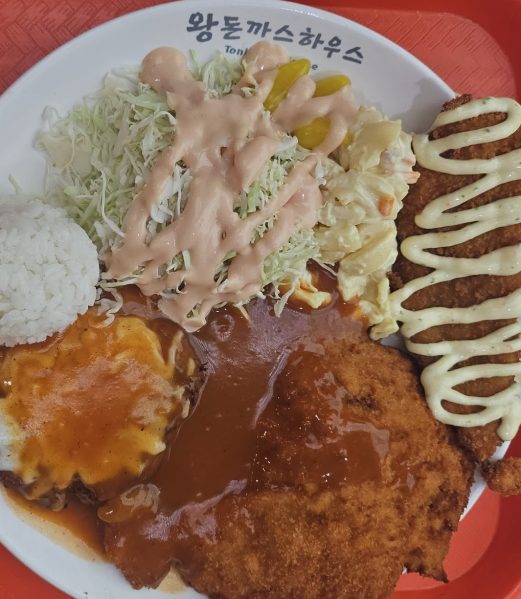
- Donkatsu: $14.99 + tax
- Donkatsu combo: $16.99 + tax
Given U.S. prices these days, this felt genuinely fair — especially considering the size and quality you're getting. This isn't a "pay a premium for nostalgia" situation; it's legitimately good value.
Tips for American Readers
- Finding it: Head to the basement food court at Koreatown Plaza in LA. There's a whole cluster of solid Korean food stalls down there, so it's worth wandering around and checking out a few other spots while you're at it.
- Wait time: Budget around 10 minutes if it's busy — not a big deal, but good to know going in.
- Go for the combo if you want something more filling — the $16.99 combo is a solid upgrade.
- First time trying Korean donkatsu? Order it exactly as it comes. The sauce, the cabbage salad, the macaroni salad — it's all designed to be eaten together, not separated out.
Final Verdict: ⭐ 4.0/5 — If You're Craving Real Korean Donkatsu, This Is the Spot
There's something genuinely special about finding the exact flavor of a special-occasion dish from your childhood, now sitting in a basement food court in LA of all places. For a second, standing there with a tray in my hands, I was back forty years in time, feeling a little proud just for having ordered it. It's not hard to see why this place has built such a loyal following among Korean locals.
If you're craving that nostalgic, old-school Korean-style king-sized donkatsu, do yourself a favor and check out Donkatsu House LA at Koreatown Plaza. Some flavors really do stick with you for decades — and it turns out, you don't have to fly back to Korea to find them again.
If you've never tried Korean donkatsu before, this could be an easy place to start. It's casual, comforting, crispy, and very approachable — even if Korean food is new to you. 🙂