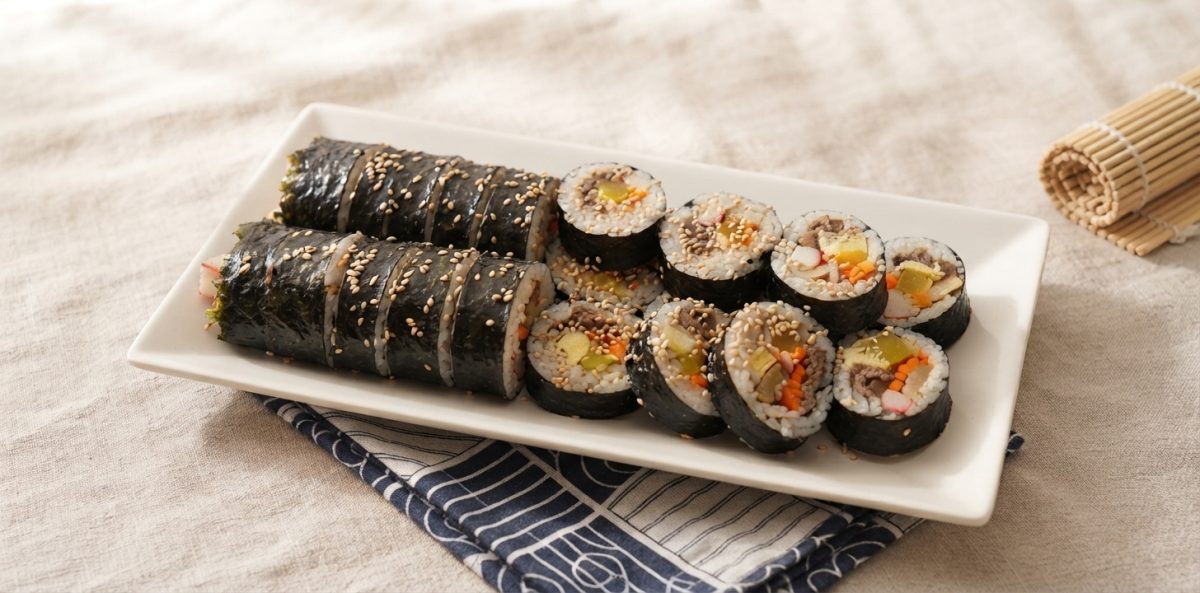

I have a confession: as a kid growing up in Korea, I didn't lose sleep before school field trips because I was excited to see waterfalls or historical palaces. I lost sleep because of what was waiting for me in my lunchbox the next morning — kimbap, rolled tight, sliced into perfect little wheels, packed alongside an ice-cold can of Sprite. That pairing — kimbap and Sprite — wasn't just a quirk of my family. It was practically a national law of Korean childhood. Open ten lunchboxes on any school field trip, and nine of them had kimbap sitting inside.
Fast forward a few decades, and I'm living in the U.S., watching this same rice roll I used to lose sleep over become a genuine American obsession. Trader Joe's kimbap disappears off shelves almost as fast as it gets restocked. And at this year's U.S. Open tennis tournament in New York, vendors were selling bulgogi kimbap and vegetable kimbap for $23 a roll, right there next to hot dogs and lemonade stands. My childhood lunchbox staple is now stadium food at a Grand Slam. Honestly, I did not see that coming — and I don't think my ten-year-old self, eating kimbap on a school bus, would have believed it either.
What Is Kimbap, Exactly?
The name tells you exactly what you're getting: gim means seaweed, bap means rice. Put them together and you get a Korean seaweed rice roll — a very modest way to describe something this satisfying.
People bring up kimbap vs sushi constantly, and I understand why — visually, they're cousins. But the family resemblance is skin-deep. Sushi rice is seasoned with vinegar and typically built around one star ingredient, often raw fish. Kimbap rice, by contrast, is seasoned with sesame oil, salt, and toasted sesame seeds, and the roll itself is more of an ensemble cast — five or six different fillings, each cooked and seasoned separately before they ever meet inside the seaweed. And critically: no raw fish, ever. Everything inside a traditional kimbap is cooked, pickled, or cured, which is exactly why it became the ultimate lunchbox food for generations of Korean kids. It travels well. It doesn't need refrigeration to survive a few hours in a backpack in the sun. Kimbap was basically designed for field trips before "field trip food" was even a category people thought about
Why Kimbap Is Actually Good for You
Kimbap is one of those rare foods that accidentally nails "balanced meal" without trying to be a wellness product. In a single roll, you get carbohydrates from the rice, protein from the bulgogi, eggs, and fish cake, and a genuine vegetable lineup — carrots, spinach, pickled radish, sometimes cucumber. The sesame oil and toasted sesame seeds contribute healthy unsaturated fats, and the seaweed itself is a solid source of iodine and trace minerals that a lot of Western diets don't get nearly enough of.
Is it a health food you should eat three meals a day? Not exactly — the rice-to-everything-else ratio leans carb-heavy, so I'd call it a well-constructed, satisfying meal rather than a diet food. But compared to a lot of grab-and-go American lunch options, kimbap is doing a lot more nutritional work per bite, and it does it without a shred of processed convenience-food shortcut.
Kimbap vs. Sushi vs. American Lunch Classics
If you're trying to place kimbap on the map of familiar American food, think of it as sitting somewhere between a wrap sandwich and a sushi roll. Like a wrap, it's a self-contained, handheld meal built for eating on the move — no fork required, no assembly at the table. Like a sushi roll, it's sliced into neat, bite-sized pieces that make it easy to share, portion out, or eat one-handed while doing something else entirely (like, say, watching a school bus movie).
But unlike sushi, which really does need to stay cold to be safe, kimbap holds up fine at room temperature for several hours. That single fact is exactly why it dominates Korean picnics, road trips, and school field trips in a way sushi never could — and why it translates so naturally to the American picnic blanket, tailgate, or lunchbox.
How to Enjoy Kimbap in the U.S.
- New to kimbap? Start easy. Trader Joe's frozen kimbap (around $4 for nine pieces) is a genuinely solid, low-commitment introduction. It's not going to out-taste a fresh roll from a Korean restaurant, but it's a fair, affordable first date with the dish.
- Making it at home? Mise en place is non-negotiable. Once you start rolling, there's no pausing to go chop carrots. Every single filling needs to be cooked, seasoned, and lined up on the counter before you ever touch the bamboo mat.
- Get a bamboo rolling mat (kimbal). These run just a few dollars on Amazon or at any Korean grocery store, and rolling kimbap without one is an exercise in frustration I genuinely don't recommend putting yourself through.
- Swap spinach for cucumber in summer. Spinach wilts and turns fast in hot weather, so a lot of home cooks — myself included — skip it in the summer months and use fresh cucumber instead for crunch and color.
Slice with a sharp, slightly wet knife. A dry blade drags on the rice and seaweed and makes for messy, squished slices. A quick wipe with a damp cloth between cuts keeps every piece clean.
A Home Cook's Kimbap Recipe (Makes About 10 Rolls)
If you're wondering how to make kimbap at home, here's the exact recipe I use, start to finish.
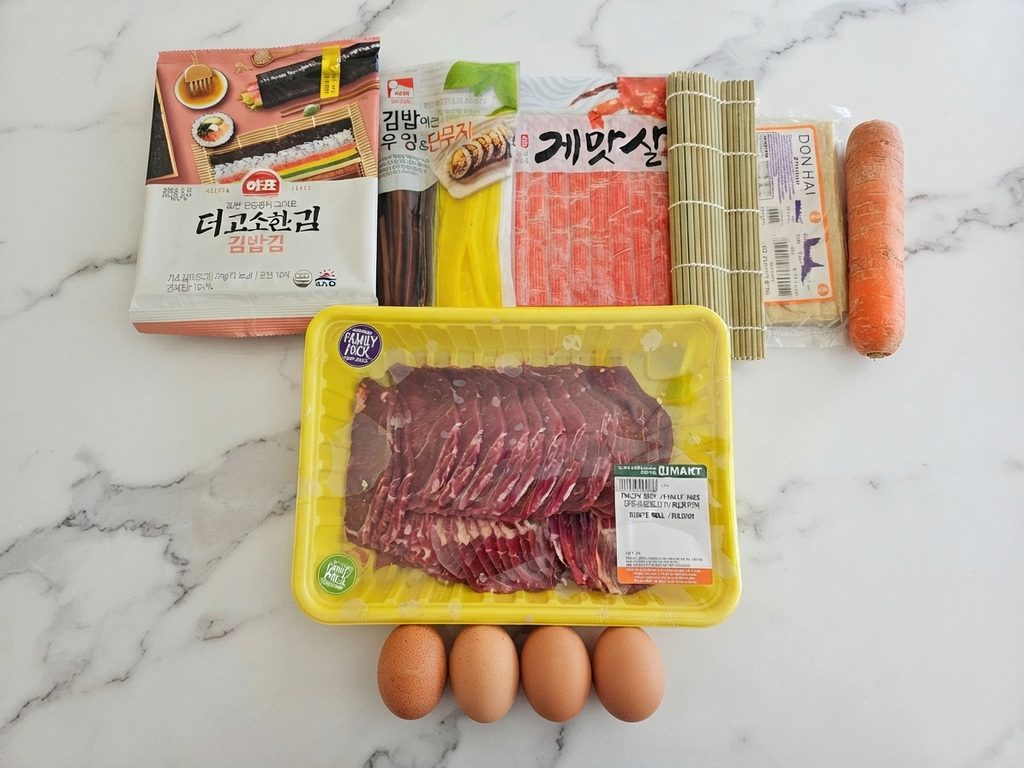
Marinate the Beef
- 2 lbs beef (ribeye or bulgogi-cut works well)
- 4 tbsp soy sauce, 1 tbsp minced garlic, 2 tbsp sugar, 1 tbsp sesame oil, a pinch of black pepper
- 4 tbsp pear or apple juice (this tenderizes the meat — a classic Korean trick)
- A splash of Korean cooking wine (mirin works too)
Mix everything together and let the beef marinate for at least 30 minutes, longer if you have the time.
Prep the Fillings
- Eggs: Beat 4 eggs with a pinch of salt and pepper, cook into thin sheets, then slice into thin strips.
- Carrots: Julienne, season lightly with salt, and quickly stir-fry in oil.
- Fish cake (eomuk): Marinate in about 1 to 1.5 tbsp soy sauce with a bit of sugar, then pan-fry until lightly caramelized.
- Imitation crab: Split in half and warm briefly in the pan — no seasoning needed.
- The marinated beef: Stir-fry until slightly caramelized and sweet, then set aside to cool a bit.
- Pickled radish and burdock root: A pre-made package from a Korean grocery store saves a lot of time here, and honestly tastes great.
- Spinach: Traditional and worth including if you can — just skip it in peak summer heat, when it spoils fast, and swap in cucumber instead.
Season the Rice
For about 10 rolls' worth of cooked rice, mix in 1.5 tbsp salt, 2 tbsp sesame oil, and 1.5 tbsp toasted sesame seeds while the rice is still warm. This step matters more than people think — properly seasoned rice is genuinely half of what makes kimbap taste like kimbap, rather than just "rice in seaweed."
Roll the Kimbap
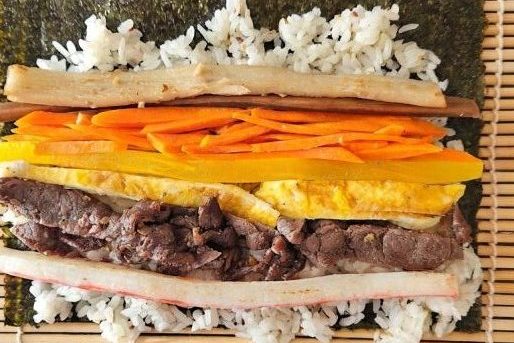
Lay a sheet of seaweed shiny-side down on your bamboo mat, spread a thin, even layer of rice over most of the sheet, and arrange your fillings in a line near the bottom edge. Starting from that edge, roll tightly using the mat as a guide, pressing firmly as you go so everything compresses into one clean, sliceable roll by the time you reach the end.
Frequently Asked Questions About Kimbap
Is kimbap the same as sushi?
No. Kimbap uses sesame oil–seasoned rice and always contains cooked, pickled, or cured fillings — never raw fish — while sushi rice is vinegar-seasoned and often built around raw fish.
Can you eat kimbap at room temperature?
Yes. Because nothing inside is raw, kimbap is safe and traditionally eaten at room temperature for several hours, which is why it's such a popular picnic and lunchbox food.
Where can I buy kimbap in the U.S.?
Trader Joe's sells a frozen version (about $4 for nine pieces), and it's increasingly available at Korean grocery stores, some Asian markets, and even specialty food vendors at large events.
What's the difference between kimbap and gimbap?
Nothing — they're the same word. "Gimbap" is the more accurate Korean romanization, while "kimbap" is the more common spelling in the U.S.
Is kimbap healthy?
It's a well-balanced meal with carbs, protein, and vegetables in one roll, though it's rice-heavy, so it's best thought of as a satisfying meal rather than a low-carb diet food.