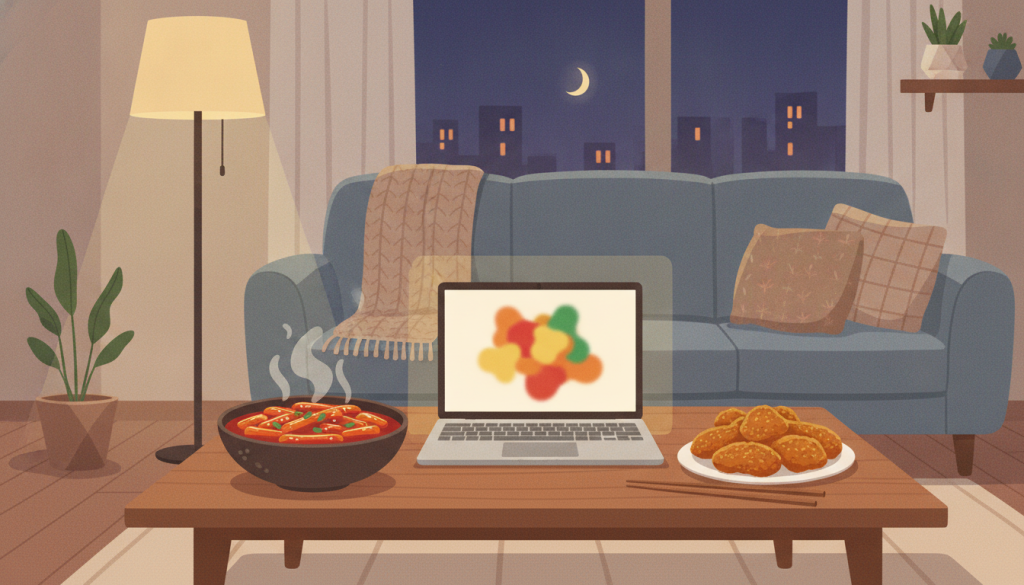

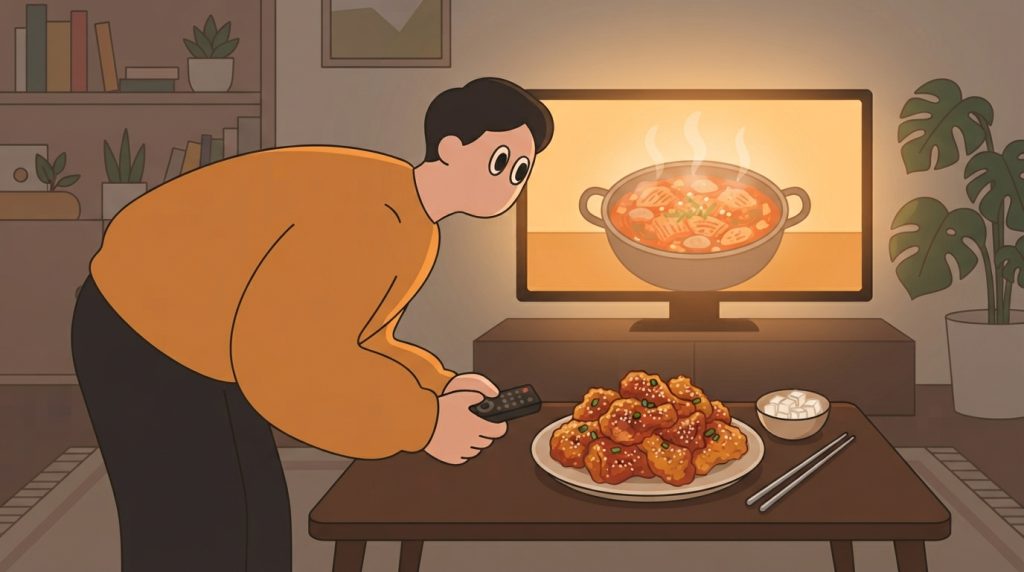
I have a confession to make. Every time I watch Welcome, First Time in Korea?, I catch myself leaning into the screen like it's going to feed me through the TV. There's a moment — you probably know it if you've seen this show — when a foreign guest takes their first bite of ganjang gejang (soy-marinated raw crab) and their eyes go wide. And every single time, I start salivating right along with them.
Ganjang gejang, live octopus, jokbal (pig's trotters) — as a Korean person myself, I'll admit these are a genuinely bold ask for someone trying them cold. So when a guest hesitates, pokes at it, finally takes the plunge, and goes "wait, this is actually really good?" — something in me lights up. Half of it is just being delighted that they're delighted. The other half is a very specific feeling I can only describe as: I need to go back to Korea and eat that again, immediately.
It doesn't stop there. When someone stares down a plate of sundae (Korean blood sausage) with pure confusion, I've caught myself narrating out loud to my TV. "That's blood sausage with glass noodles, just try it, you'll be fine." The guest, obviously, cannot hear me. I am a grown adult doing unpaid PR for Korean food to a stranger on a screen who will never know I exist.
And the thing is, it doesn't end with watching. Every time I see someone light up over Korean fried chicken on screen, I go looking for the closest thing to it here in the U.S. That's how I ended up a regular at a Korean fried chicken spot near me. It's pricier than the American chains, but it's not overly salty, and it tastes shockingly close to the real thing back home. No delivery, unfortunately, so it means an actual drive — but honestly, that's a small price to pay.
Here's what gets me, though: I'm clearly not the only one wired this way. People all over the world watch strangers eat on camera, get hungry, and then go order food of their own. So what is it about mukbang that has this kind of pull?
A Brief History of Mukbang
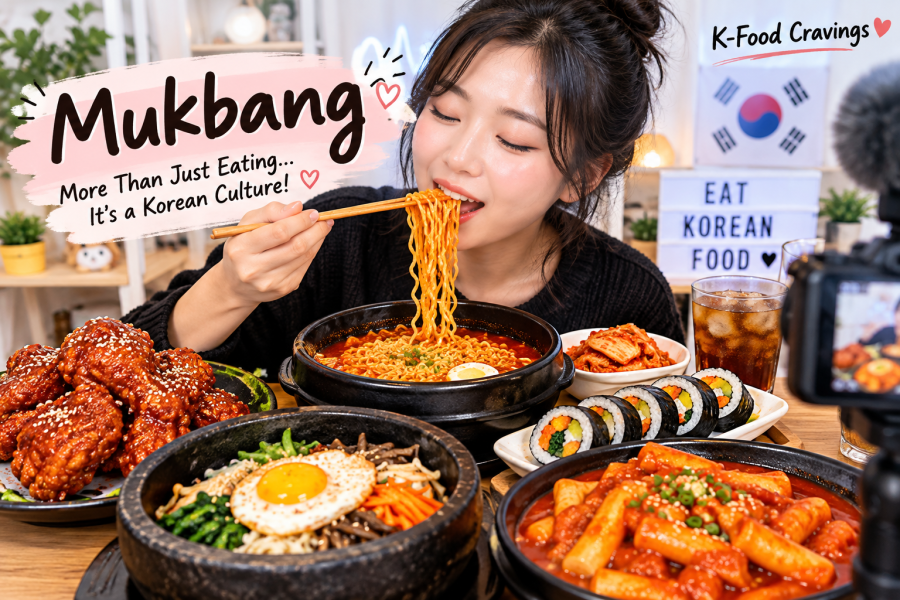
Here's something that surprised me: "mukbang" is a much newer word than it feels. It's a mashup of the Korean words for "eating" (meokneun) and "broadcast" (bangsong), and it traces back to around 2009–2010 on AfreecaTV (now rebranded as SOOP), a Korean livestreaming platform. Back then, broadcasters — known as BJs — would stream for hours at a stretch, and eating just naturally became part of the show. Viewers responded to it more than anyone expected, sending virtual "star balloons" as a form of tip, which is how BJs started actually making money off of it. In other words, mukbang wasn't a planned content strategy. It was a happy accident.
Around 2015, the format made its way to YouTube, and by 2018 it had gone fully global. In 2021, "mukbang" was officially added to the Oxford English Dictionary — right up there with K-pop and kimchi as Korean words that made it into everyday English. What started as pure "who can eat the most, the fastest" content has since branched into ASMR-style eating (all about the sound), food challenges (looking at you, Buldak fire noodles), and reaction-style content like Welcome, First Time in Korea?, where the appeal is watching someone experience Korean food for the very first time.
So What Exactly Is Mukbang?
At its simplest, mukbang is just someone eating on camera. Which, on paper, sounds like it shouldn't work at all. Why would anyone want to watch a stranger eat dinner? But the format works because the host isn't just eating — they're talking to you the whole time. "Oh, this part's the crispiest." "You have to try this with the sauce." It's less like watching a cooking show and more like sitting across the table from a friend. And that's really the whole trick: mukbang makes eating alone feel a little less alone.
Why Mukbang Is So Weirdly Addictive
So why do I keep abandoning my couch mid-episode to go pick up chicken? A few things seem to be going on.
Vicarious satisfaction. Watching someone enjoy a meal seems to give your brain a small hit of satisfaction, even if you're not the one eating. It's obviously not the same as actually eating, but it does seem to take the edge off that "I want food right now" feeling, at least for a few minutes.
Shared hesitation. There's something oddly comforting about watching someone else hesitate in front of live octopus or blood sausage before deciding it's actually good. It reminds you that you're not the only one who'd pause in front of an unfamiliar dish — everyone gets a little nervous before the first bite.
A stand-in for company at dinner. As more people live alone, more people eat alone, too. Mukbang fills that gap by acting as a kind of virtual dinner companion. In a food culture like Korea's, where meals have traditionally been a group affair, eating solo can feel especially quiet — and mukbang gives that quiet some noise.
The sound. The crunch of fried chicken, the sizzle of a hot pan, the squelch of sauce being tossed together — this is where the ASMR crowd comes in. Good audio design in a mukbang video can make your mouth water before you've even processed what's on the plate.
How This Compares to American Food Culture
It's not like the U.S. has nothing like this. Shows like Man v. Food, or events like the Nathan's Famous hot dog eating contest on Coney Island, have been putting "how much, how fast" front and center for years. And these days, plenty of American YouTubers have adopted the word "mukbang" itself and are making very similar content.
The difference is mostly in what gets emphasized. American-style content tends to lean hard into competition — quantity, speed, the spectacle of it. Korean mukbang leans more into companionship and sound. And a show like Welcome, First Time in Korea?, where the fun is watching someone's genuine first reaction to unfamiliar food, actually has a lot in common with American travel and reaction content — the "first time trying X" genre exists everywhere. Turns out, no matter where you're from, people just love watching someone's face when they taste something for the first time.
Mukbang Channels Worth Checking Out
If you want to dip a toe into mukbang, here are three channels to start with:
Tzuyang — With over 13 million subscribers, she's currently the biggest name in mukbang. She started her channel in 2018 and has built a following on huge portions paired with genuinely fun reactions. She covers cuisines well beyond Korean food, too, which makes her a good one for comparing how Korean dishes stack up against everything else.
Dorothy — With more than 4 million subscribers, Dorothy's videos are shorter and cover a wide range of Korean dishes, which makes her channel an easy entry point if you're new to the format. A lot of her videos have English subtitles, so language isn't a barrier.
Nikocado Avocado — An American mukbanger with over 3 million subscribers. If you want to see the "American version" of this genre in action — and get a feel for how the format shifted once it crossed the Pacific — his channel is a solid reference point.
How to Enjoy Mukbang Culture Here in the U.S.
You don't need a plane ticket to get in on this. Here's how to build your own version of it stateside:
- Host a "mukbang night." Grab some Korean takeout — delivery availability varies a lot by area, so check first — pull up a mukbang video, and eat together. It's basically the opposite of eating alone, which is the whole point.
- Track down Korean fried chicken near you. Delivery is often not an option, so treat the pickup itself as part of the ritual. Order both the soy garlic and the gochujang (spicy) versions if you can — they taste completely different, and comparing them is half the fun.
- Start with the familiar, save the bold stuff for later. Watch the live octopus and blood sausage videos for entertainment, but ease into actually trying Korean food with something more approachable, like tteokbokki or kimbap.
- Pay attention to the sound. Once you know why crunchy, sizzly food hits different in mukbang videos, you'll start noticing — and enjoying — it in your own meals too.
At the end of the day, mukbang isn't really about the food itself — it's about watching someone enjoy something so much that you want in on it too. And honestly? That's a pretty universal feeling. Whether it's fried chicken, live octopus, or a bowl of instant noodles at 2 a.m., we all just want someone to eat with. Mukbang just happens to make that possible, one screen at a time.
Frequently Asked Questions About Mukbang
What Does Mukbang Mean?
Mukbang combines the Korean words for "eating" (meokneun) and "broadcast" (bangsong). It refers to video content of someone eating, usually while talking with their audience.
Where Did Mukbang Come From?
Mukbang originated in South Korea around 2009–2010 on the livestreaming platform AfreecaTV (now SOOP), before spreading to YouTube around 2015 and going global by 2018.
Is Mukbang the Same as Competitive Eating?
Not quite. Competitive eating focuses on speed and quantity. Mukbang can include that, but it's traditionally more about companionship, conversation, and the sensory experience of eating.
Why Do People Watch Mukbang Instead of Just Eating Themselves?
Mukbang offers a sense of vicarious satisfaction and company, especially for people eating alone. The visual and audio elements can also be genuinely enjoyable on their own.